






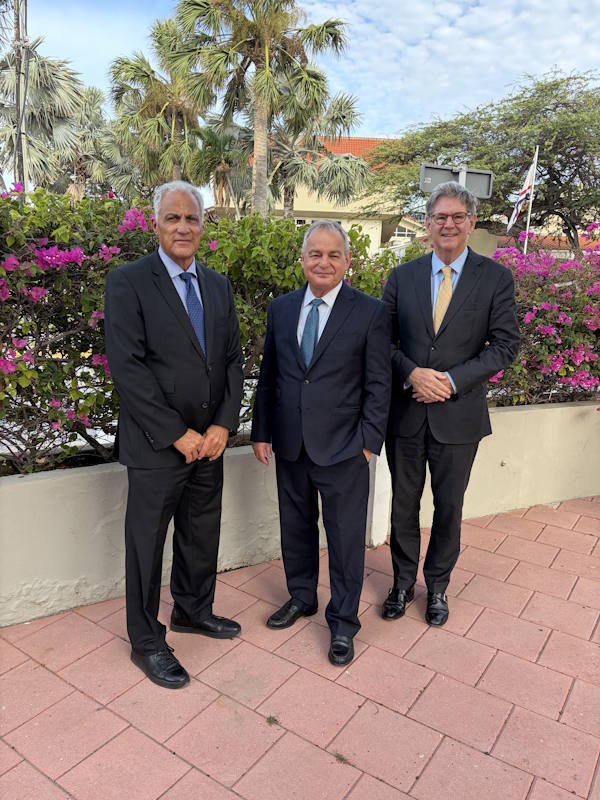
 Oranjestad:--- The Board of Financial Supervision Aruba (CAft) advises the Aruba government to make a fundamental choice about the future of tourism and to fully incorporate it into the budget, the multiannual investment agenda, and tax regulations. Aruba's economy is so closely interrelated with tourism that this choice will affect all Ministers. Tourism is the primary driver of economic growth, yet it is also the greatest risk to the sustainability of public finances.
Financial economic situation
From an economic standpoint, Aruba is still doing well, although after years of strong tourism recovery, growth is leveling off. In recent years, the public sector debt ratio has dropped significantly to 64 percent in 2025. The operating result and the country’s result remain positive. Aruba is highly vulnerable to economic shocks; in 2020, for example, it was among the most severely affected economies. An uncertain global economy and an aging population pose significant risks to public finances.
Tourism: driving force and risk
For years, tourism has driven the Aruban economy. Over the past 20 years, tourism activity has virtually doubled. Further growth in the number of tourists is reaching its limits, limits that are already perceivable. The labor market faces a structural shortage, the utility sector is reaching capacity limits, traffic congestion is increasing, and the housing market is under increasing pressure. The main obstacle is not a lack of plans, but a lack of implementation. The CAft emphasizes that, considering the current financial room, now is the time to invest and to reform. Precisely while pressure on public finances remains limited.
Choose direction
The CAft stresses the importance of Aruba making choices now. If the focus is on attracting more visitors, tourism pressure on the country will continue to grow; focusing on value per visitor and economic diversification could bridge the gap between tourism growth and prosperity growth. In that context, Tourism 3.0 is a valuable starting point for the public debate. Establishing new institutions to shape tourism policy may hinder effective tourism policy. Establishing new funds financed through earmarked taxes could fragment government spending. Recently, Aruba initiated regulation of short-stay lodging. The CAft recognizes the importance of effective regulation and enforcement in this policy area and recommends further development. In collaboration with the IMF, Aruba is exploring replacing the BBO with a VAT system. Introducing a VAT system would broaden the base to include the informal sector.
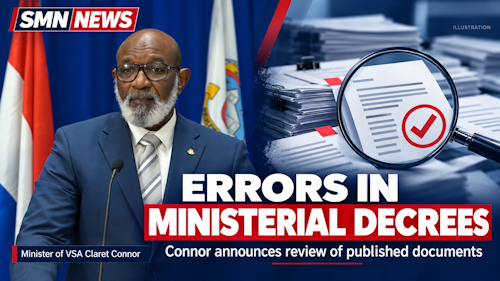 PHILIPSBURG:--- Minister of Public Health, Social Development and Labor Claret Connor has acknowledged errors and inconsistencies in ministerial decrees published in the National Gazette on October 9, 2026, saying further verification is needed to establish where the discrepancies occurred and what corrective action is required.
 PHILIPSBURG:--- VROMI Minister Patrice Gumbs Jr. says private developers are financing several public infrastructure projects in full, as government turns to partnerships to address financial shortfalls.
 PHILIPSBURG:--- Collective Prevention Services, St. Maarten Medical Center and Radboudumc in the Netherlands are inviting parents and expectant parents to participate in a community survey on vaccination perceptions and awareness of respiratory syncytial virus, commonly known as RSV.
 PHILIPSBURG:--- The Court of Appeal has sentenced Alexander Mario Ettrick Chandler, Alphonse Asa-Asher Charles and Diomedes Mendez Santeli to 12 years in prison each for their roles in the fatal shooting of 24-year-old Tion D’Sean Scott outside the Gentlemen’s Club in Defiance on April 13, 2025.