






Saint-Martin crews are still waiting for written passage rules after authorities seized 356 pounds of fish. Dutch-side charter operators need clarity on permits, and Sint Maarten’s finance minister must account for departure taxes at Simpson Bay.
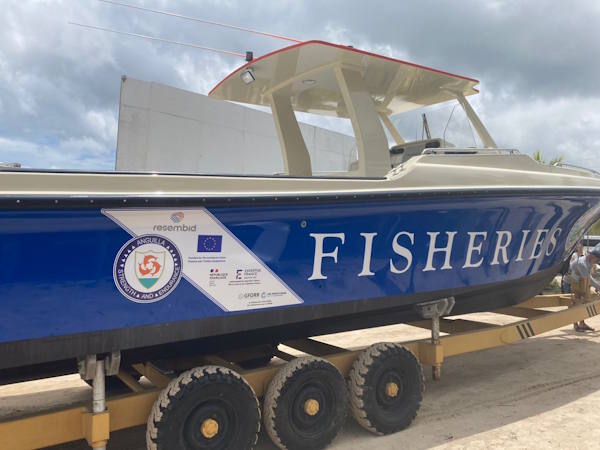 MARIGOT, SAINT MARTIN:--- Anguilla found a willing partner in Europe when it needed a vessel to patrol its marine parks. The European Union helped finance the boat through RESEMBID, and France’s development cooperation agency, Expertise France, implemented the program. Now fishermen from French Saint-Martin are asking Anguilla for something considerably less expensive than a patrol boat. They want written instructions on crossing Anguillian waters to reach fishing grounds beyond them and a clear decision on whether they can obtain licenses to fish inside those waters. After the November 18 talks, both questions remain open.
That is the hypocrisy Anguilla’s government needs to confront. Regional cooperation was worth celebrating when it helped put an enforcement vessel on the water. It should count just as much when a neighboring crew needs to know whom to call before sailing, what documents to carry, and what happens to its catch if it is stopped. Anguilla has the authority to enforce its rules. It should explain exactly how it enforces them.
A 356-pound seizure and a patrol boat Anguilla has yet to identify
On September 24, officers from the Royal Anguilla Police Force’s Marine Unit, HM Customs and Immigration intercepted a Saint-Martin-registered fishing boat near Anguillita, a small cay off Anguilla’s western tip. The officers escorted it to Sandy Ground, where Fisheries Unit officials confiscated approximately 356 pounds of fish. Customs issued the captain a formal warning over entry procedures. Fisheries officials declined to pursue charges over the catch. What was the basis for keeping the fish, and what procedure was available for the captain to challenge the seizure?
The public account identifies the agencies involved and leaves the patrol craft unidentified. Anguilla should disclose whether officers used the EU-backed Fisheries and Marine Resources Unit vessel in that operation or in any stops involving Sint Maarten charter operators. The launch footage shows a Fisheries Unit boat, while Customs participated in the September interception alongside other agencies. Anguilla can settle the question by identifying the vessel and explaining which agency operated it.
Rebel Marine built the fisheries vessel locally, and Anguilla launched it on July 10, 2024. The € 587,024 RESEMBID allocation covered the broader project to improve management of Anguilla’s six marine parks. The project report documents the boat’s use for marine park enforcement, mooring buoy deployment, and shark and ray monitoring. It also records exchanges with conservation colleagues in Saint-Martin and Saint-Barthélemy. Those relationships give fishing communities and the agencies that supported the project good reason to ask how the vessel is used today.
Twelve licenses were requested. A passage procedure is still needed.
At the November 18 meeting, the delegation from Saint-Martin and Saint-Barthélemy sought about 12 fishing licenses. Anguilla confirmed that it had approved or issued none and had reached no agreement to grant them. The Saint-Martin Chamber of Commerce, the CCISM, separately asked for an interim procedure so crews could declare their passage through Anguillian waters on the way to fishing grounds beyond the 12-nautical-mile limit. A captain needs a clear answer to each question before leaving port. Where may the crew fish, and what must it do when it is simply passing through?
The CCISM calls for designated contacts on both sides, written inspection procedures, and clarity on how crews can document fishing locations and catches. A skipper should have a number to call when stopped at sea. When a catch is seized, the crew should receive a written record of what was taken, why it was taken and how to contest the decision. A joint advisory committee can help work out those procedures, but it has no authority to grant licenses. Governments still have to make and publish those decisions.
Anguillian fishermen have also raised serious allegations. They claim French gendarmes destroyed their catch, that a fisherman operating a French-registered vessel pulled a gun on them, and that fishermen from St. Martin have been stealing their fish pots. It remains unclear whether anyone filed a formal complaint over the alleged gun incident or whether evidence supports the accusation. It is also unclear whether anyone reported the alleged fish pot thefts to the Royal Anguilla Police Force or provided evidence identifying those responsible. Authorities on both sides should say which allegations were formally reported, what evidence they received and whether they opened investigations.
Saint-Martin fishermen suspended a planned blockade to give talks a chance, and the Soualiga fishermen’s association sought direct involvement in future negotiations. Both governments should use that opening to put fishing crews from both islands at the table and give them rules they can follow.
Dutch-side charter operators need the rules before they leave the dock
Sint Maarten TEATT Minister Grisha Heyliger-Marten said after talks in Anguilla that the proposed legislation would allow Sint Maarten-based charter boats to continue operating. Existing cruising permit requirements remain in force. Charter operators need written instructions on where they may take passengers, where those passengers must clear, what paperwork crews must carry and what penalties apply. The two governments should publish the same instructions so that what operators are told in Simpson Bay matches what officers enforce when they arrive in Anguilla.
Marinka Gumbs must account for departure taxes at Simpson Bay
The reported absence of a government tax collector at the Simpson Bay pickup point for Anguilla-bound passengers demands an answer from Finance Minister Marinka Gumbs. Who is responsible for collecting any Sint Maarten departure tax or fee that applies there? Do operators collect it on the government’s behalf? Which office checks that the money reaches the Treasury? The public ferry information identifies the route and leaves those collection questions unanswered.
The minister should publish the legal basis for any charge, identify who collects it, and ensure that receipts are reconciled against passenger manifests every day. If the charge is built into the fare, show how the government verifies remittances. If a lawful charge is going uncollected, assign responsibility for collecting it and account for the shortfall.
Before Sint Maarten asks pensioners living on fixed incomes to shoulder more of the fiscal burden, it should show that it collects the revenue already due from commercial activity. Anguilla owes fishermen clear rules and an account of how it enforces them. Sint Maarten owes its taxpayers an account of what it collects at its own dock.