






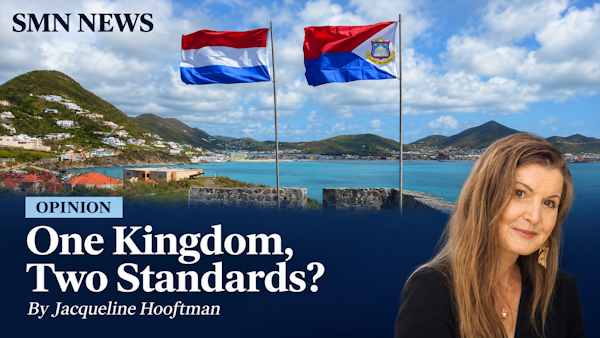
 Why does the Netherlands, despite its thousands of politicians and history of major political scandals, have relatively few criminal investigations involving its political establishment, while tiny St. Maarten has seen eleven politicians and former politicians face criminal proceedings, several ending in prison sentences?
Is this simply a difference in corruption levels? Or should we also question how the two countries investigate, prosecute, and punish political misconduct?
The question is particularly relevant because much of St. Maarten's enforcement machinery is supported by substantial Dutch financial and institutional resources.
- Dutch scandals, limited criminal accountability -
The Dutch childcare benefits scandal, the Toeslagenaffaire, devastated thousands of families wrongly accused of fraud. Parents were financially ruined, and some children were separated from their families. The scandal brought down the third Rutte government in January 2021.
Yet criminal consequences for the political leadership were remarkably limited.
Following criminal complaints against several ministers and former ministers, the Prosecutor General at the Supreme Court advised against ordering a criminal investigation.
Under Article 119 of the Dutch Constitution, prosecuting ministers and MPs for official misconduct requires a special order from the Government or a resolution of the House of Representatives.
Parliament also rejected a proposal to establish an investigative committee into allegations that the government had withheld information during the scandal. The proposal was defeated by 97 votes to 34.
Then came the Mondkapjesaffaire. Sywert van Lienden and his business partners made approximately €29.3 million in profit from a face-mask transaction involving around €100 million worth of masks. The businessmen faced criminal prosecution, but the political leadership did not face comparable criminal consequences.
The Netherlands does prosecute corrupt politicians. Former North Holland provincial executive member Ton Hooijmaijers, for example, received two years and five months in prison for bribery, forgery and money laundering. But how often do investigations involving political officeholders, particularly at national level, actually result in prison sentences?
- Twelve Dutch mayors, thirteen misadventures -
My own journalistic experience offers another perspective.
In the 1990s, together with the late investigative reporter Henk Hanssen, I investigated twelve Dutch mayors. Our investigation exposed allegations involving substantial bribes, misuse of public funds, fraud, and abuse of office.
Panorama magazine published the investigation on its cover under the headline "Twaalf Burgemeesters, Dertien Ongelukken" – "Twelve Mayors, Thirteen Misadventures".
I do not recall any of the twelve being prosecuted when our investigation appeared.
An official figure is also worth considering. In a letter to Parliament dated April 25, 2023, the Dutch Minister of the Interior reported approximately twenty criminal investigations involving political officeholders since 1990.
Twenty investigations in more than three decades, in a country with thousands of political officeholders.
- And then there is St. Maarten -
Since obtaining autonomous country status in 2010, St. Maarten has seen eleven politicians and former politicians face criminal proceedings. Several have received prison sentences or been disqualified from public office.
Consider former MP Rolando Brison. In the Lisbon case, the court found him guilty of bribery in one of three cases and acquitted him in the other two. He received six months of unconditional imprisonment, was ordered to repay approximately US$8,000 in benefits associated with the proven offense and was disqualified for five years from holding public office or standing for election.
How does that sentence compare with punishments for comparable offenses elsewhere in the Kingdom? The Public Prosecutor's Office also appealed aspects of the judgment.
Other cases include former Minister Christopher Emmanuel, sentenced to 29 months in the Jasmine investigation, former Minister Maria Buncamper-Molanus and her husband Claudius, and former Minister of Justice Lyndon Lewis, who faces prosecution in the Alicante investigation.
Nobody should be above the law. But accountability must also be proportionate.
- Millions invested in Caribbean enforcement -
Dutch funding for the coordinated approach to undermining crime in the Caribbean part of the Kingdom increased from €12 million to €24 million annually by 2025.
The program involves organizations including the RST, the Caribbean Public Prosecutor's Office and the Joint Court of Justice, and targets corruption, financial crime and money laundering, including offenses involving politically exposed persons.
I am not arguing against Dutch assistance. But where is the transparency?
How much is spent investigating politicians? How many cases result in convictions, acquittals or discontinued proceedings? Who evaluates whether the enforcement priorities and methods are proportionate?
Dutch financial support should come with accountability.
- One Kingdom, two standards? -
Every arrest, search of a government office, and prison sentence generates another headline about corruption in St. Maarten. The island risks being portrayed as a place where political corruption defines public life.
Yet the Netherlands itself has experienced scandals involving abuse of government power, devastated families and questionable public procurement.
Why do the standards of scrutiny appear so different?
Why does the Dutch Constitution impose a special procedure for prosecuting ministers and MPs? Why did the childcare benefits scandal not result in criminal investigations of the political leadership?
And why should St. Maarten accept a different standard of justice simply because it is smaller and has less political influence?
The fight against corruption is necessary. But so is the fight against double standards.