






Voluntary roles for retired professionals could keep departments functioning during lengthy recruitment processes while helping younger recruits gain valuable institutional knowledge.
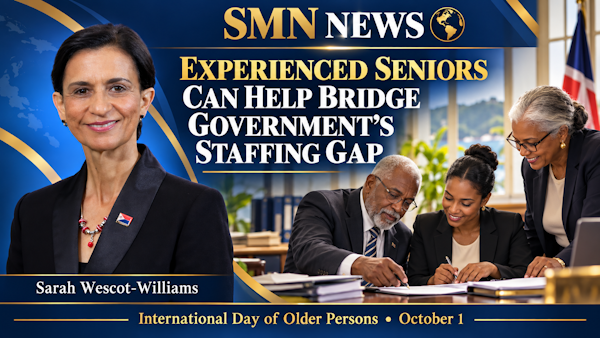 PHILIPSBURG:--- President of Parliament Sarah Wescot-Williams has urged government to draw on the experience of willing older persons to help address staffing shortages, proposing temporary arrangements that would keep departments functioning while vacant positions are being filled.
In a statement marking the United Nations International Day of Older Persons, Wescot-Williams said Sint Maarten should regard longer lives as an opportunity to retain valuable skills and knowledge.
She linked her proposal to the theme cited in her statement, “The Age of Longevity: Rethinking Systems for Longer Lives,” which emphasizes ensuring that additional years translate into healthy, productive, dignified and equitable lives.
“Rethinking systems is exactly what is needed,” she said. “And here in Sint Maarten, we have a system that is in urgent need of rethinking: the way we fill vacancies in government.”
Lengthy Recruitment Leaves Departments Under Pressure
Wescot-Williams identified the long period between recognizing a vacancy and appointing someone to fill it as an ongoing challenge.
During that interval, government can lose qualified candidates, work accumulates, and existing employees face additional pressure.
She proposed engaging experienced older persons, including former civil servants and other seasoned professionals, to provide temporary support while recruitment proceeds. Participation, she emphasized, must be entirely voluntary.
“Only if they agree, of course,” she said. “No one should be pulled out of a well-earned retirement.”
She noted that many older people remain healthy, capable, and willing to contribute, bringing decades of knowledge about how government and other institutions operate.
Supporting Young Recruits and Transferring Knowledge
Under the proposed arrangement, experienced professionals would help maintain departmental operations while government continues recruiting new and younger employees.
Once a recruit takes up the position, the experienced professional could assist with onboarding and pass on practical knowledge that written procedures cannot fully capture.
“This is not about replacing young people. It is the opposite,” Wescot-Williams said. “It is about making sure that the door stays open for them, and that when they walk through it, someone experienced is there to help them find their way.”
She described this exchange as an opportunity to strengthen knowledge transfer while honoring the contributions of older persons.
Contracts, Pensions and Costs Require Examination
Wescot-Williams encouraged government to examine how such arrangements could work in practice, including their contractual terms, pension implications and budgetary requirements.
The approach, she said, must be fair to participating professionals and workable for the departments receiving their support.
Her statement also highlighted the potential “longevity dividend” associated with supporting older persons to remain active and engaged.
“Our older persons built this country,” Wescot-Williams said. “Many of them would welcome the chance to help build its future as well. Let us give them that opportunity, on their terms.”