





MP questions reduced funding for family and humanitarian affairs, the absence of a clear GEBE relief provision, and rising spending on outside services.
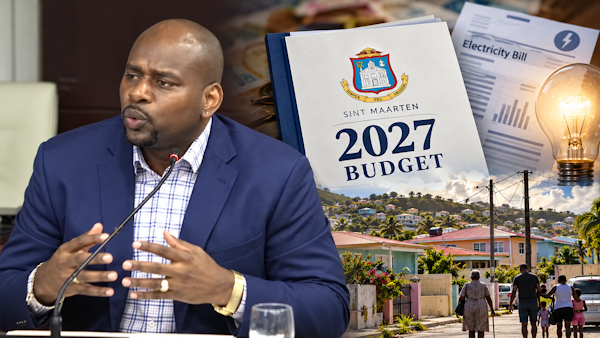 PHILIPSBURG:--- Member of Parliament Omar Ottley delivered a sweeping challenge to the draft 2027 national budget on Tuesday, arguing that government is finding money for outside services and new initiatives while reducing the funds available to help vulnerable residents.
“This budget does not reflect the needs of the people of St. Martin,” Ottley told the Central Committee of Parliament. His strongest objection concerned the proposed allocation for Community Development, Family and Humanitarian Affairs, which he said falls from approximately C$ 955,000 in 2026 to Cg 488,000 in 2027.
According to Ottley, the budget explanation attributes the decrease to funds being shifted to other purposes. He demanded that government identify those purposes and explain which community projects would continue.
“What are these other purposes?” he asked. “What projects did the monies go for in 2026 that are no longer needed in 2027?”
Ottley, a former Minister of Public Health, Social Development and Labor, spoke personally about the department’s work. He said its programmes had helped repair homes, deliver food supplies, provide health awareness activities, distribute sanitary products to schools and offer computer classes to seniors.
He stressed that his criticism was directed at political leadership, not the department’s staff. In his view, a reduction of this size required a clear account of what government had accomplished with the previous allocation and what services residents could expect next year.
Where is the relief for electricity bills?
Ottley also said he could find no specific GEBE relief provision in the draft budget, despite an earlier government statement about approximately Cg 1.5 million in relief. He asked whether government would match the assistance he said GEBE had provided and whether further help was planned for households facing rising electricity and living costs.
“Where is the buffer for the people?” he asked, contrasting that concern with what he described as a higher government allocation for transportation fuel and maintenance.
The question requires a precise response from the Council of Ministers. A programme may be funded under a budget heading that does not carry the name residents know it by. Government should identify the relevant line, the amount available, who qualifies and when assistance will reach households—or state plainly that no such provision has been made.
Outside services and unfinished work
Ottley accused government of increasing spending on third-party services and consultants while reducing community support. He described a rise of more than Cg 5 million in such spending and called for the public to see what the contracts would produce. That comparison is his reading of the draft budget; the government has yet to respond to his calculations during this stage of the debate.
He also questioned allocations he said were intended for mental health planning and finalizing legislation. If a ten-year mental health plan was approved in 2025, he asked, what distinct work would a proposed Cg 600,000 allocation for a strategic plan in 2027 purchase? He sought a similar breakdown for a proposed Cg 800,000 allocation connected to finalizing legislation.
His challenge was consistent throughout: budget entries should be tied to work the public can identify, a completion date and a result.
Questions across the ministries
Ottley’s intervention extended well beyond social support. He asked Finance Minister Marinka Gumbs to explain the Cg 3 million ENNIA provision, including what it covers and what progress has been made on the arrangement. He questioned whether references to 2025 in parts of the 2027 budget were errors or descriptions of work still unfinished.
On utilities, he asked for an update on GEBE’s proposed generators and the financing needed to obtain them. He pressed government to examine fuel purchasing, pricing and practices elsewhere in the Caribbean that might help contain electricity costs. He also asked why government’s own electricity and water allocation had risen so sharply in the figures he cited.
For the Ministry of Justice, Ottley sought a plan for detention capacity, crime prevention and outstanding payments to justice workers. For VROMI, he questioned a proposed reduction in garbage collection funding, even as residents continued to send him photographs and videos of unclean neighborhoods.
He asked for the basis of proposed capital allocations of Cg 10 million for a Parliament building, and Cg 9 million to purchase buildings the government currently rents, including whether sites, designs or specific properties had been identified.
These were questions for ministers, not answers set out in Tuesday’s speech. The government’s response will determine whether the disputed amounts have been interpreted correctly and whether Ottley’s concerns reflect actual cuts to services or changes in how programmes are funded.
A budget measured by what residents receive
Ottley acknowledged the Finance Minister’s commitment to her budget, but said good intentions and requests for more time were no longer enough. With the 2026 budget approved only weeks ago, he also wanted to know whether projects funded through its amendments would be completed before the year ends and why some did not appear to carry into 2027.
His closing message returned to the people he believes the budget is leaving behind: households struggling with utility bills, seniors, and residents who rely on community and humanitarian programmes.
The ministers now have an opportunity to do more than offer assurances. They must show Parliament where the relief is funded, explain the proposed decrease in community support, identify what outside contracts will deliver, and demonstrate how the 2027 budget will reach the residents Ottley says it has forgotten.