




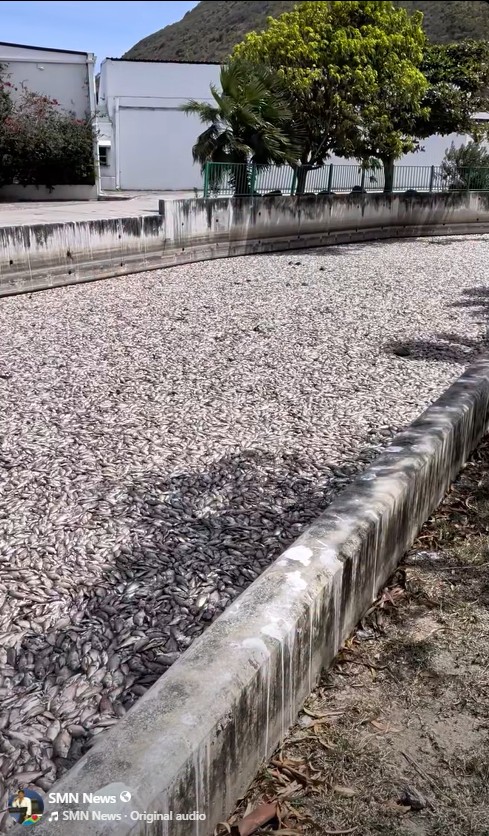
 PHILIPSBURG:--- Thousands of dead fish floating in the canal connecting to the Great Salt Pond near the A.T. Illidge Road roundabout have once again exposed the environmental vulnerability of one of St. Maarten's most neglected ecosystems.
By Friday morning, a thick blanket of fish carcasses covered sections of the canal, creating a disturbing sight for motorists and nearby residents. As temperatures continued to rise throughout the day, the smell of decomposition intensified, prompting concerns about public health and environmental management.
The Ministry of Public Housing, Spatial Planning, Environment and Infrastructure (VROMI) mobilized cleanup crews to begin removing the dead fish in an effort to reduce the stench and prevent further deterioration of water quality.
However, while cleanup is necessary, it addresses only the symptom—not the underlying problem.
A Drought-Driven Ecological Disaster
St. Maarten is currently experiencing prolonged dry conditions, and the Great Salt Pond is paying the price.
Environmental experts have long warned that during periods of drought, shallow ponds become increasingly vulnerable to oxygen depletion. As water levels fall and temperatures climb, warm water can no longer hold sufficient dissolved oxygen to sustain aquatic life.
Without adequate rainfall to replenish the pond and improve water circulation, fish become trapped in stagnant water where oxygen levels rapidly collapse. The result is mass suffocation.
The species most affected appears to be tilapia, an invasive fish that has become well established throughout the Great Salt Pond.
A Warning that returns every year
The Nature Foundation St. Maarten has repeatedly documented similar fish kills during extended dry periods. The organization has consistently warned that the combination of:
- prolonged drought,
- extreme summer temperatures,
- stagnant water,
- low oxygen levels, and
- restricted water exchange
creates ideal conditions for these environmental disasters.
Yet despite these recurring events, the island continues to react after the damage has already occurred rather than implementing long-term solutions.
Public Health Cannot Be Ignored
Residents are being urged not to collect or consume any fish from the affected area.
The Great Salt Pond has long suffered from poor water quality due to years of environmental pressure. Fish dying from oxygen depletion and prolonged exposure to polluted water should never enter the food chain.
As decomposition accelerates in tropical heat, nearby communities can also expect unpleasant odors and an increase in flies until the cleanup is completed.
Is Climate Change Making Matters Worse?
Scientists have warned that Caribbean islands are likely to experience longer dry seasons, more intense heat waves and more frequent droughts as climate patterns continue to change.
If these predictions become reality, fish kills such as the one now unfolding at the Great Salt Pond could become more common unless significant environmental management measures are introduced.
The recurring die-offs raise broader questions about whether enough is being done to improve water circulation, restore the pond's ecological health, and prepare for increasingly extreme weather conditions.
More than just dead fish
Today's cleanup by VROMI removes the visible evidence of the crisis, but it does not eliminate the conditions that caused it.
The Great Salt Pond remains one of St. Maarten's most important natural basins, serving as part of the island's drainage system while also supporting birdlife and aquatic species. Every mass fish die-off is another reminder that prolonged drought, rising temperatures, and declining water quality are placing increasing stress on an already fragile ecosystem.
As cleanup crews continue removing thousands of carcasses from the canal, the larger question remains unanswered:
How many more times will St. Maarten simply clean up the dead fish before addressing the environmental conditions that continue to kill them?