




~Court rules Sint Maarten honored years of informal agreements and cannot refuse payment after accepting vehicles for nearly two decades~
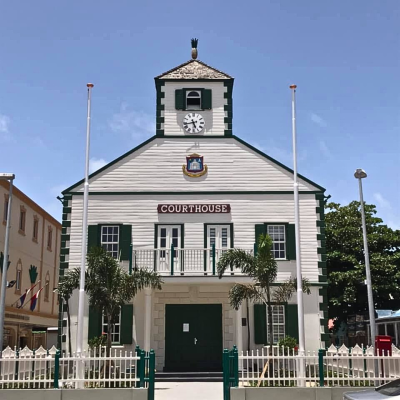 PHILIPSBURG:--- The Government of Sint Maarten has been ordered to pay more than US$195,000 to local company Xpress Car Rental N.V. after the Court of First Instance ruled that the government could not escape its financial obligations by arguing that no written rental contracts existed.
In a judgment delivered on May 26, 2026, the court found that the government had maintained a business relationship with Xpress Car Rental for more than 15 years, routinely ordering vehicles by telephone, accepting delivery, using the cars, and paying invoices under the same informal arrangement.
The dispute arose after the government stopped paying invoices issued between October 2022 and August 2024, leaving Xpress with more than US$200,000 in unpaid rental charges.
Government lawyers argued that the company had failed to produce written rental agreements, purchase orders, or signed contracts proving that the vehicles had been officially hired. They also challenged several invoices, claiming there was insufficient documentation.
Judge L.J. Saarloos acknowledged that Xpress had never secured written contracts but concluded that the longstanding course of dealing between the parties carried decisive legal weight.
"The fact that invoices alone do not prove a contract does not end the matter," the court effectively held. Years of uninterrupted business practices demonstrated that rental agreements had repeatedly been formed and honored by both sides.
Years of Acceptance
According to the judgment, government departments routinely telephoned Xpress to request vehicles. The cars were delivered, used by government employees, returned after use, and invoices were then submitted to the government's Facility Services Department.
For years, the government accepted the invoices without objection, often paying them in installments.
Only in September 2024, after years of following the same procedure, did officials request additional documentation supporting the charges.
The court ruled that the government waited far too long to question invoices it had routinely accepted.
By failing to object within a reasonable period, the government created a legitimate expectation that no additional documentation was required, the judge found.
Most of the Claims Upheld
While largely siding with Xpress, the court disallowed several invoices that lacked government receipt stamps, as well as one invoice referenced in a summary but never produced during the proceedings.
Those deductions reduced the award from US$207,674.45 to US$195,253.45.
The government had claimed it had already paid approximately US$62,557 toward the debt. However, the court found no evidence supporting that assertion during the hearing.
The judge ruled that if the government later proves those payments were made, they may be credited against the outstanding balance.
Authority Defense Rejected
The government also argued that civil servants who ordered the vehicles lacked the legal authority to bind the country to rental agreements.
The court rejected that defense outright.
Given the relatively modest value of each individual rental, the judge ruled that ministerial or Council of Ministers approval was not required for each transaction.
Collection Costs Denied
Although Xpress prevailed on the principal claim, the court refused to award the company's requested US$10,000 in collection costs.
The judge noted that only one letter of demand had been sent before litigation and criticized the amount sought as significantly exceeding what court rules normally allow.
Financial Implications
In addition to paying US$195,253.45, the Government of Sint Maarten must pay statutory interest dating back to April 7, 2025, along with nearly Cg. 10,000 in legal costs.
The decision serves as a reminder that governments, like private businesses, may be legally bound by long-established commercial practices—even when formal contracts are absent.
For businesses that have supplied goods or services to the public sector under longstanding informal arrangements, the ruling reinforces that consistent conduct and years of accepted invoices can establish enforceable contractual obligations under Sint Maarten law.
Click for Courts decision: ECLI:NL:OGEAM:2026:76, Gerecht in eerste aanleg van Sint Maarten, SXM202500703