




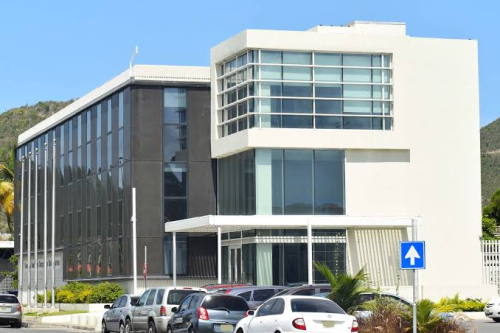
 PHILIPSBURG:--- The economies of Curaçao and St. Maarten continue to ride a wave of strong post-pandemic growth, but the Central Bank of Curaçao and Sint Maarten (CBCS) is warning that dangerous geopolitical currents could quickly change the outlook.
Presenting its June 2026 Economic Bulletin under the theme "Riding Today's Wave to Prepare for Tomorrow's Risks," CBCS President Richard Doornbosch delivered a clear message: while both islands are enjoying healthy economic expansion fueled by tourism, policymakers cannot afford complacency in an increasingly volatile global environment.
Growth Continues—but at a Slower Pace
After posting one of the strongest economic performances in recent years, both countries are expected to maintain growth, although at a more sustainable pace.
Curaçao's economy, which expanded by an impressive 5.1 percent in 2025, is projected to grow 2.7 percent in 2026 before moderating to 2.3 percent in 2027. St. Maarten is expected to slow from 3.5 percent growth in 2025 to 2.6 percent this year, easing further to 2.2 percent in 2027.
Rather than signaling weakness, the CBCS says this moderation reflects the transition from an exceptional post-COVID recovery toward more stable long-term expansion.
Tourism remains the backbone of both economies.
The Central Bank noted that despite escalating conflict in the Middle East and heightened global uncertainty, visitor arrivals have remained remarkably resilient. In fact, both islands appear to be benefiting from a shift in international travel patterns, as tourists who might otherwise have vacationed in the Middle East or parts of Asia are choosing Caribbean destinations instead.
Tourism Investment Driving the Economy
Large-scale hotel and real estate developments continue to underpin economic activity.
In Curaçao, projects including The Pyrmont, TUI Blue, Epic at the Bay, The View, One Mambo Beach Phase Two, and Bella Vista are expected to fuel private investment.
Meanwhile, St. Maarten's expansion is supported by developments such as Dolce Beach Residence, The Setai luxury resort, and Acqua Resort, alongside increased public infrastructure spending.
The Bank also believes Curaçao's historic qualification for the 2026 FIFA World Cup offers an opportunity to boost international visibility and strengthen tourism demand well beyond the tournament itself.
Inflation Returns—but Remains Manageable
Consumers should prepare for higher prices this year.
The CBCS projects inflation in Curaçao will increase from 2.0 percent to 2.4 percent, while St. Maarten's inflation is expected to rise from 0.9 percent to 2.1 percent.
The increases are being driven largely by higher global oil prices and rising transportation costs stemming from geopolitical tensions in the Middle East.
Fuel prices have already surged dramatically.
Between February and May this year, gasoline and diesel prices rose by more than 30 percent in Curaçao and more than 45 percent in St. Maarten, placing renewed pressure on households and businesses. Nevertheless, the Central Bank expects inflationary pressures to ease gradually as energy markets stabilize.
Fiscal Discipline Paying Off
One of the most encouraging aspects of the report is the continued improvement in government finances.
Both Curaçao and St. Maarten are expected to maintain budget surpluses over the medium term.
St. Maarten's public debt is projected to continue declining—from 40.7 percent of GDP in 2025 to 37 percent by 2030—while Curaçao's debt ratio is expected to rise modestly in the short term because of increased borrowing for public investment before stabilizing later in the decade.
At the monetary union level, foreign reserves remain strong, with import coverage expected to remain well above internationally accepted benchmarks, providing an important buffer against external shocks.
The Biggest Threat Comes from Abroad
Despite the positive outlook, the CBCS emphasized that the greatest risks are external.
A prolonged Middle East conflict could disrupt global shipping through the Strait of Hormuz, sending oil prices even higher and triggering stagflation—a combination of slower economic growth and higher inflation.
Additional risks include the war in Ukraine, global trade tensions, supply chain disruptions, tighter international financial conditions, and uncertainty surrounding Venezuela's economic future.
For two small, highly import-dependent island economies, these developments could significantly raise living costs, reduce purchasing power, weaken tourism demand, and increase business expenses.
Building Resilience for the Future
Rather than merely responding to crises, the Central Bank is urging governments to prepare now.
The report calls for:
- Greater investment in renewable energy to reduce dependence on imported fuel.
- Stronger fiscal and foreign reserve buffers.
- Continued structural reforms to improve the investment climate.
- Better financing opportunities for small and medium-sized businesses.
- Workforce training to address labor shortages.
- Improved disaster preparedness, including St. Maarten's proposed Disaster Reserve Fund.
The Bank argues that targeted assistance for vulnerable households is preferable to broad fuel tax cuts, which tend to weaken public finances while disproportionately benefiting higher-income earners.
A Moment of Opportunity
The Central Bank's message is ultimately one of cautious optimism.
The economies of Curaçao and St. Maarten are stronger today than they were just a few years ago. Tourism is thriving, government finances are improving, inflation remains relatively contained, and foreign reserves are healthy.
But success today does not guarantee stability tomorrow.
As President Richard Doornbosch concluded, the challenge facing both countries is not simply surviving the next global crisis but using today's economic momentum to build economies that are more productive, diversified, sustainable, and resilient.
In other words, the Caribbean may be riding a strong economic wave—but it must use that momentum to prepare for the storms that inevitably lie ahead.