




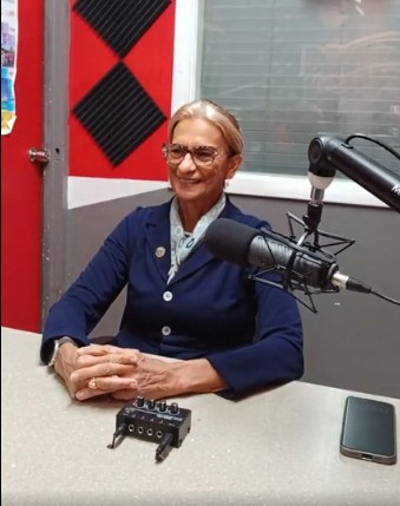
 PHILIPSBURG:--- Chairlady of Parliament and veteran Member of Parliament Sarah Wescot-Williams has outlined an ambitious vision for strengthening Kingdom cooperation while also addressing pressing national concerns ranging from the ongoing GEBE crisis to governance reforms and democratic accountability. During an extensive interview, Wescot-Williams reflected on recent developments at the Inter-Parliamentary Kingdom Consultation (IPKO), the Kingdom's democratic structure, and challenges confronting Sint Maarten.
IPKO Reform Initiative Gains Broad Support
Fresh from attending the latest IPKO meeting in The Hague, Wescot-Williams described the successful adoption of her proposal aimed at making the inter-parliamentary platform more effective and results-oriented.
The veteran parliamentarian emphasized that while dialogue among the four Kingdom parliaments remains important, discussions must translate into tangible outcomes.
According to Wescot-Williams, the newly adopted framework focuses on greater accountability, improved follow-up mechanisms, and more structured decision-making. She noted that future IPKO meetings will place greater emphasis on tracking previous agreements and ensuring participating governments and parliaments report on progress achieved.
"The platform must yield results," she stressed, explaining that Parliamentarians from Aruba, Curaçao, Sint Maarten, and the Netherlands embraced the proposal as a means of enhancing cooperation and strengthening mutual respect within the Kingdom.
Push for Greater Kingdom Accountability
A major component of the reform agenda is bringing Kingdom ministers directly before the four parliaments that participate in IPKO.
Wescot-Williams argued that ministers responsible for Kingdom affairs, including Defense and Foreign Affairs, should be accountable not only to the Dutch Parliament but also to the parliaments of the Caribbean countries within the Kingdom.
She welcomed the participation of the Dutch State Secretary at the recent IPKO session and expressed hope that future consultations will include more Kingdom ministers engaging directly with parliamentarians from all four countries.
Caribbean Countries Challenge Dutch Abstention on Slavery Resolution
One of the most significant issues discussed during the consultation concerned the Kingdom's abstention from a United Nations vote on slavery and reparatory justice.
Wescot-Williams revealed that neither Sint Maarten, Aruba, nor Curaçao had been consulted before the Kingdom cast its abstention vote.
The Chairlady expressed strong dissatisfaction with what she described as a lack of consultation on a matter of profound historical significance to the Caribbean countries.
Following discussions among the Caribbean delegations, a formal objection was drafted and communicated to both Kingdom authorities and Dutch counterparts.
"The issue is deeper than simply saying, 'Oops, next time we'll know better,'" she said, emphasizing that decisions affecting the Caribbean countries must involve their governments and representatives.
She further argued that the incident highlights the need for a broader discussion about Kingdom representation at international institutions such as the United Nations.
Democratic Deficit Remains Unresolved
Wescot-Williams also addressed the longstanding issue of the so-called "democratic deficit" within the Kingdom.
She explained that a committee established by IPKO in 2024 is currently reviewing historical reports and recommendations aimed at addressing the lack of parliamentary influence over certain Kingdom-level decisions.
The committee is expected to deliver its findings in October 2026.
According to Wescot-Williams, previous studies have often been shelved without meaningful implementation. She urged all participating parliaments to commit seriously to addressing the recommendations once the report is finalized.
Kingdom Conference Expected this Year
Another major development emerging from IPKO is the anticipated Kingdom Conference scheduled for later this year.
The conference, expected to bring together governments at the highest level, has been discussed for years but repeatedly delayed.
Wescot-Williams disclosed that Sint Maarten has offered to host the gathering, which could take place in November.
Importantly, she is advocating for parliamentary involvement in the conference process rather than limiting participation to government officials alone.
The Dutch State Secretary reportedly expressed support for exploring a role for parliaments in the conference proceedings.
GEBE Leadership Crisis Raises Concerns
Turning to domestic matters, Wescot-Williams addressed the surprise resignation of GEBE Transition Manager Thomas Roggendorf, whose tenure lasted slightly over a year.
She admitted that the resignation did not entirely surprise her, given the mounting challenges surrounding the utility company.
The MP questioned whether the current governance structure of government-owned companies is appropriate for a utility provider responsible for essential services such as electricity and water.
According to Wescot-Williams, the existing framework often creates conflicts between the government's responsibilities as a shareholder and its obligations to citizens.
She pointed to longstanding delays in appointing key executives, board members, and strategic leadership, while critical operational issues continue to affect the utility.
"How long are we going to go through all of this?" she questioned.
Growing Frustration Over Utility Bills
The Chairlady acknowledged growing public frustration with GEBE's billing practices and escalating fuel-clause charges.
She noted that many residents have reported receiving utility bills containing substantial outstanding balances that they struggle to understand or verify.
Wescot-Williams said she intends to seek additional clarification directly from GEBE regarding the basis for these charges.
She also highlighted concerns raised in a redacted investigative report conducted jointly by RAC Curaçao and BTP Sint Maarten, which examined tariff structures and billing procedures.
According to her account, GEBE disputed portions of the report's conclusions and promised to provide alternative data and explanations. However, she indicated that Parliament has yet to receive a comprehensive response.
Consumer Protection Body Welcomed
Regarding the newly formed Association for Consumer Protection Sint Maarten (ACP SXM), Wescot-Williams welcomed the concept of a consumer protection organization.
While she admitted she had not yet reviewed the association's specific objectives, she said consumer advocacy bodies play an important role in assisting residents facing challenges with service providers and other businesses.
The organization is among the groups supporting a protest march on June 15 concerning GEBE's billing practices.
Call for Alternative Energy Solutions
Wescot-Williams stressed that Sint Maarten must accelerate efforts to develop alternative energy solutions.
She referenced funding opportunities available through Dutch sustainability programs and questioned why the country has not yet fully accessed resources earmarked for renewable energy development.
The MP advocated programs to help households install solar panels and reduce their dependence on costly traditional energy sources.
Such measures, she argued, could provide long-term relief for families struggling with high electricity costs.
Parliamentary Delays Explained
Responding to criticism about delayed parliamentary meetings and a backlog of agenda items, Wescot-Williams explained that many sessions depend on the availability of ministers and requested information from government departments.
She maintained that Parliament regularly schedules meetings but often faces delays when ministers are unable to attend or when requested documentation remains outstanding.
The Chairlady also noted that quorum requirements must be met before public meetings can begin, contributing to occasional delays.
Time for a National Dialogue on Governance
Reflecting on Sint Maarten's development sixteen years after attaining country status on October 10, 2010, Wescot-Williams called for a comprehensive review of the country's governance structure.
While defending democratic institutions such as the Ombudsman, Council of Advice, and Integrity Chamber, she acknowledged concerns about the costs and capacity requirements associated with maintaining multiple institutions in a small country.
The MP suggested it may be time for an honest national conversation about how Sint Maarten can modernize and streamline aspects of governance while preserving essential democratic safeguards.
"We need a national dialogue on the direction of this country," she said.
Coalition Stability Remains Intact
Addressing recent political tensions surrounding the departure of Minister Richinel Brug, Wescot-Williams acknowledged that the situation was difficult for all involved.
However, she defended the coalition's handling of the matter, explaining that the minister's own political party had determined it could no longer maintain him in office.
Despite the controversy, she emphasized that coalition partners acted in what they believed to be the broader interest of political stability and governance.
The Democratic Party leader concluded by reaffirming her commitment to open dialogue with the public and continued engagement on issues affecting Sint Maarten's future.