




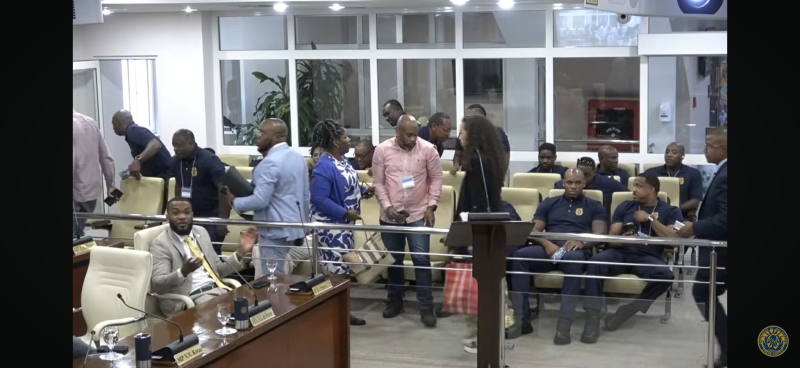
 PHILIPSBURG:---Today’s public meeting in the Parliament of Sint Maarten was nothing short of a political spectacle, marked by chaos, frustration, and a dramatic walkout by opposition MPs and coalition member MP Ludmilla De Weever. The tribune, filled with disillusioned firefighters and ambulance workers, also emptied in protest, leaving the hall in a state of disarray. The session, which was meant to address a motion of disapproval against Prime Minister Dr. Luc Mercelina, ended abruptly due to a lack of quorum, further highlighting the dysfunction plaguing the government.
Deputy Prime Minister Steps in Amid Prime Minister’s Absence
In the absence of Prime Minister Dr. Luc Mercelina, Deputy Prime Minister Grisha Heyliger-Marten attempted to fill the void, addressing Parliament on matters related to the Ministry of General Affairs, especially pertaining to the firefighters and ambulance workers who have been on a go-slow for more than a year. Her presence was a response to repeated calls from members of Parliament for substitute ministers to step in when the Prime Minister is unavailable. However, her efforts to provide clarity and respond to questions were overshadowed by the escalating tensions in the chamber.
Chairlady of Parliament Sarah Wescot-Williams acknowledged the Deputy Prime Minister’s attempt to address the concerns raised by MPs but lamented the absence of the Prime Minister himself. Despite the Deputy Prime Minister’s presence and the attendance of the Minister of VSA and their support staff, the meeting could not proceed due to insufficient members present to establish a quorum. Chairlady Wescot-Williams confirmed the roll call, noting the absence of several MPs, and declared that the meeting would resume next Monday, with the expectation that the Prime Minister will finally appear to address the pressing issues.
A Motion of Disapproval and a Crisis in Leadership
The motion of disapproval, presented by Opposition MP Francisco Lacroes, outlined a litany of failures under the Prime Minister’s leadership. These included the persistent inability of departments under his purview—such as legal affairs, personnel, and the Fire Department—to provide adequate support to other ministries, leading to operational breakdowns and diminished public trust. The motion also highlighted the ongoing "go-slow" action by the Fire Department and ambulance services, which has severely impaired emergency response capacity since April of last year, endangering public safety and the country’s tourism sector.
The Prime Minister’s repeated failure to address long-standing personnel and labor issues, including the refusal to properly compensate Fire Department personnel for years of service under incorrect salary scales, has only deepened the crisis. The motion called for urgent action to resolve these issues and demanded that the Prime Minister return to Parliament within six weeks with a full update.
 Opposition Walkout and Public Outrage
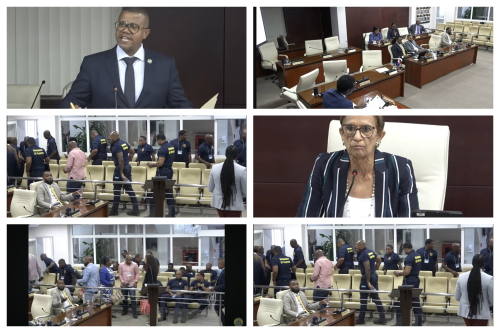
The frustration reached a boiling point when Chairlady Wescot-Williams announced that the Prime Minister would be given the opportunity to respond to the motion and outstanding questions in the next session. Opposition MPs, joined by coalition member Ludmilla De Weever, walked out in protest, signaling their dissatisfaction with the government’s handling of the crisis. The firefighters and ambulance workers, who had filled the tribune in a show of solidarity, also marched out, leaving the hall eerily empty and underscoring the gravity of the situation.
A Nation Left in Limbo
As the meeting adjourned, the public was left with more questions than answers. The Deputy Prime Minister’s attempt to address the concerns was commendable but ultimately insufficient in the absence of the Prime Minister. The lack of quorum and the dramatic walkout by MPs and emergency service workers further highlighted the deep divisions and dysfunction within the government.
The meeting is set to resume next Monday, with the Prime Minister expected to finally face Parliament and address the motion of disapproval. However, the damage to public trust and the morale of emergency service workers has already been done. The people of Sint Maarten are left wondering whether their leaders can rise to the occasion and resolve the crisis or if this will be yet another chapter in a saga of political inaction and broken promises.
For now, the nation waits, but patience is wearing thin. The stakes are higher than ever, and the safety, security, and well-being of the people hang in the balance. Monday’s session will be a defining moment for the government and a test of its ability to lead in the face of mounting challenges.