Vinaora Nivo Slider 3.xVinaora Nivo Slider 3.xVinaora Nivo Slider 3.x

Chanti Scores Billboard # 1, Making History for Sint Maarten.

St. Maarten-born songwriter Chanti continues to make waves on the international music scene, co-writing three songs on P1Harmony’s latest album, which has reached No. 1 on the Billboard Album Charts.

chanti23112026SINT MAARTEN:--- Award-winning songwriter, vocalist, and performer Chanti is celebrating another major milestone in her career after contributing to the latest album by K-pop sensation P1Harmony.

The Caribbean-born songwriter co-wrote three tracks on the group’s latest release, including the lead single “BLOW UP.” The album reached No. 1 on the Billboard Album Chart and debuted at No. 4 on the Billboard 200, placing P1Harmony among some of the biggest names in music, including Olivia Rodrigo, Lil Baby, SZA, and Michael Jackson.

The achievement marks another significant moment for Chanti, whose songwriting continues to reach audiences worldwide. The group’s latest tracks have gained traction on U.S. music charts, while promotional billboards celebrating the release appear across South Korea.

This latest success adds to an already impressive list of accomplishments for the South Korean native. Earlier this year, Chanti received one of South Korea’s most prestigious music honors, a Golden Disc Award, for RIIZE’s “Another Life’’.

Often regarded as one of South Korea’s Grammy Awards. From her Caribbean roots in Sint Maarten to the heart of Seoul’s competitive music industry, Chanti’s journey is a testament to the global reach of Caribbean talent and the power of pursuing creative ambitions beyond borders.

As she continues to build her international career, Chanti remains focused on creating music, securing new collaborations and representing her home island on the world stage.


Master Class in Film Hopes To Inspire St. Maarten Creatives to Tell Stories That Matter.

Participants gain valuable insights into documentary filmmaking, directing, research, and responsible storytelling.

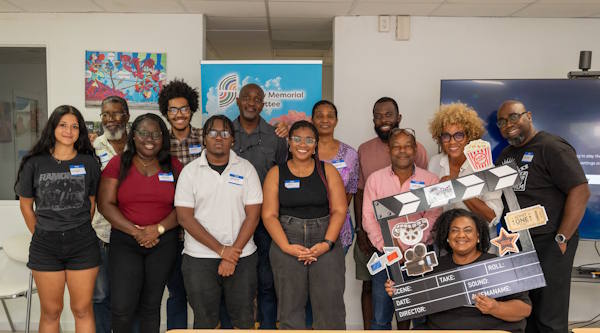
filmmasterclass23112026PHILIPSBURG:--- The Slavery Memorial Committee successfully hosted its Master Class in Film: Creative Storytelling & Documentary Filmmaking on Saturday, November 21, at the 4C Foundation Training Room on A. Th. Illidge Road.

The initiative brought together aspiring filmmakers, content creators, storytellers, and creative professionals for an engaging learning experience focused on documentary filmmaking from a director's and storytelling perspective.

Award-winning director and documentary producer Mildred Roethof, Founder of Human Nature Films, facilitated the masterclass alongside Michel Drenthe, Founder and Producer of Caribbean Filmcom, who shared their professional experiences, industry knowledge, and perspectives on bringing meaningful stories to the screen.

Beyond the Camera: Understanding the Responsibility of Storytelling

Throughout the sessions, participants explored essential elements of documentary filmmaking, including camera angles and framing techniques, interview skills, story development, research, and the importance of identifying the right story to tell. A central message of the masterclass was the importance of believing in your story while respecting the stories entrusted to you.

Participants were encouraged to approach documentary filmmaking with curiosity, integrity, and responsibility. Particular emphasis was placed on researching and verifying information, understanding the context behind personal accounts, and ensuring that stories are represented accurately and respectfully before being presented to an audience.

The facilitators also highlighted that compelling documentaries are not simply about capturing footage. They require preparation, thoughtful questioning, active listening, sound research, and the ability to recognize the human experiences that make a story worth telling.

Sparking Curiosity and Building Creative Confidence

Beyond developing technical skills, the initiative sought to inspire participants to recognize the storytelling opportunities within their own communities.

Through this masterclass, the Slavery Memorial Committee hopes to spark greater curiosity among St. Maarten's creatives and emerging film producers, encouraging them to explore documentary filmmaking as a powerful medium for preserving history, documenting lived experiences, and sharing Caribbean perspectives.

At the conclusion of the masterclass, participants received Certificates of Participation, recognizing their commitment to learning and developing their knowledge of film and documentary storytelling.

The masterclass offers an opportunity to encourage further conversations about creative development, collaboration, and the potential to strengthen documentary filmmaking in St. Maarten and the wider Caribbean.

EU money helped put Anguilla’s patrol boat on the water. Now fishermen want answers.

Saint-Martin crews are still waiting for written passage rules after authorities seized 356 pounds of fish. Dutch-side charter operators need clarity on permits, and Sint Maarten’s finance minister must account for departure taxes at Simpson Bay.
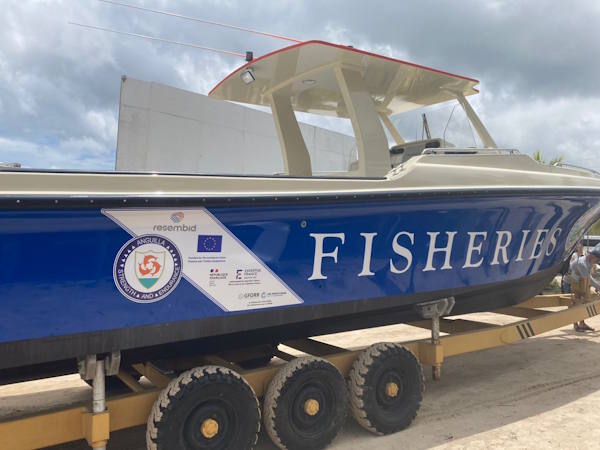
anguillanpatrolboat23112026MARIGOT, SAINT MARTIN:---  Anguilla found a willing partner in Europe when it needed a vessel to patrol its marine parks. The European Union helped finance the boat through RESEMBID, and France’s development cooperation agency, Expertise France, implemented the program. Now fishermen from French Saint-Martin are asking Anguilla for something considerably less expensive than a patrol boat. They want written instructions on crossing Anguillian waters to reach fishing grounds beyond them and a clear decision on whether they can obtain licenses to fish inside those waters. After the November 18 talks, both questions remain open.

That is the hypocrisy Anguilla’s government needs to confront. Regional cooperation was worth celebrating when it helped put an enforcement vessel on the water. It should count just as much when a neighboring crew needs to know whom to call before sailing, what documents to carry, and what happens to its catch if it is stopped. Anguilla has the authority to enforce its rules. It should explain exactly how it enforces them.

A 356-pound seizure and a patrol boat Anguilla has yet to identify

On September 24, officers from the Royal Anguilla Police Force’s Marine Unit, HM Customs and Immigration intercepted a Saint-Martin-registered fishing boat near Anguillita, a small cay off Anguilla’s western tip. The officers escorted it to Sandy Ground, where Fisheries Unit officials confiscated approximately 356 pounds of fish. Customs issued the captain a formal warning over entry procedures. Fisheries officials declined to pursue charges over the catch. What was the basis for keeping the fish, and what procedure was available for the captain to challenge the seizure?

The public account identifies the agencies involved and leaves the patrol craft unidentified. Anguilla should disclose whether officers used the EU-backed Fisheries and Marine Resources Unit vessel in that operation or in any stops involving Sint Maarten charter operators. The launch footage shows a Fisheries Unit boat, while Customs participated in the September interception alongside other agencies. Anguilla can settle the question by identifying the vessel and explaining which agency operated it.

Rebel Marine built the fisheries vessel locally, and Anguilla launched it on July 10, 2024. The € 587,024 RESEMBID allocation covered the broader project to improve management of Anguilla’s six marine parks. The project report documents the boat’s use for marine park enforcement, mooring buoy deployment, and shark and ray monitoring. It also records exchanges with conservation colleagues in Saint-Martin and Saint-Barthélemy. Those relationships give fishing communities and the agencies that supported the project good reason to ask how the vessel is used today.

Twelve licenses were requested. A passage procedure is still needed.

At the November 18 meeting, the delegation from Saint-Martin and Saint-Barthélemy sought about 12 fishing licenses. Anguilla confirmed that it had approved or issued none and had reached no agreement to grant them. The Saint-Martin Chamber of Commerce, the CCISM, separately asked for an interim procedure so crews could declare their passage through Anguillian waters on the way to fishing grounds beyond the 12-nautical-mile limit. A captain needs a clear answer to each question before leaving port. Where may the crew fish, and what must it do when it is simply passing through?

The CCISM calls for designated contacts on both sides, written inspection procedures, and clarity on how crews can document fishing locations and catches. A skipper should have a number to call when stopped at sea. When a catch is seized, the crew should receive a written record of what was taken, why it was taken and how to contest the decision. A joint advisory committee can help work out those procedures, but it has no authority to grant licenses. Governments still have to make and publish those decisions.

Anguillian fishermen have also raised serious allegations. They claim French gendarmes destroyed their catch, that a fisherman operating a French-registered vessel pulled a gun on them, and that fishermen from St. Martin have been stealing their fish pots. It remains unclear whether anyone filed a formal complaint over the alleged gun incident or whether evidence supports the accusation. It is also unclear whether anyone reported the alleged fish pot thefts to the Royal Anguilla Police Force or provided evidence identifying those responsible. Authorities on both sides should say which allegations were formally reported, what evidence they received and whether they opened investigations.

Saint-Martin fishermen suspended a planned blockade to give talks a chance, and the Soualiga fishermen’s association sought direct involvement in future negotiations. Both governments should use that opening to put fishing crews from both islands at the table and give them rules they can follow.

Dutch-side charter operators need the rules before they leave the dock

Sint Maarten TEATT Minister Grisha Heyliger-Marten said after talks in Anguilla that the proposed legislation would allow Sint Maarten-based charter boats to continue operating. Existing cruising permit requirements remain in force. Charter operators need written instructions on where they may take passengers, where those passengers must clear, what paperwork crews must carry and what penalties apply. The two governments should publish the same instructions so that what operators are told in Simpson Bay matches what officers enforce when they arrive in Anguilla.

Marinka Gumbs must account for departure taxes at Simpson Bay

The reported absence of a government tax collector at the Simpson Bay pickup point for Anguilla-bound passengers demands an answer from Finance Minister Marinka Gumbs. Who is responsible for collecting any Sint Maarten departure tax or fee that applies there? Do operators collect it on the government’s behalf? Which office checks that the money reaches the Treasury? The public ferry information identifies the route and leaves those collection questions unanswered.

The minister should publish the legal basis for any charge, identify who collects it, and ensure that receipts are reconciled against passenger manifests every day. If the charge is built into the fare, show how the government verifies remittances. If a lawful charge is going uncollected, assign responsibility for collecting it and account for the shortfall.

Before Sint Maarten asks pensioners living on fixed incomes to shoulder more of the fiscal burden, it should show that it collects the revenue already due from commercial activity. Anguilla owes fishermen clear rules and an account of how it enforces them. Sint Maarten owes its taxpayers an account of what it collects at its own dock.


St Maarten’s Newest Cohort of Correctional Officers Completes First Phase of Induction Training.

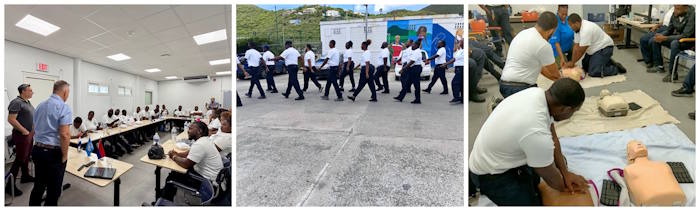
prisonofficerstraining23112026PHILIPSBURG:--- Twenty-two newly recruited correctional officers in Sint Maarten completed the first phase of their induction training on 6 November, following three weeks of classroom-based instruction.
New recruits received training across 25 topics covering essential aspects of professional correctional practice, delivered by international prison experts and local professionals specializing in physical and mental health and emergency response. Topics included prison security, communication, professional ethics, human rights, incident management, first aid, mental health awareness, suicide and self-harm prevention, and rehabilitation and reintegration.

Following the classroom-based training, recruits continued their preparation between 6 and 20 November through independent study, clarification sessions and self-directed physical training. This period also included supplementary sessions delivered by Point Blanche Prison staff and through UNODC global e-learning courses covering the Nelson Mandela Rules, basic correctional duties, prisoner classification and investigative interviewing. Together, these activities allowed recruits to consolidate the knowledge acquired, deepen their understanding of key correctional concepts and maintain their physical readiness ahead of the practical training phase

The second phase, beginning on 23 November, will focus on practical security procedures through demonstrations, drills and supervised exercises. Training will cover searches and inspections, prisoner supervision and movement, radio communication, access control and security reporting, alongside the safe and lawful use of force and restraints.

Practical exercises will include handcuffing, physical intervention, team-based restraint, breakaway and self-defense techniques, emphasizing safety, accountability, and adherence to authorized procedures. These activities will help recruits develop the skills and confidence required to perform their duties safely and professionally.

Recruiting and training new correctional officers are key steps toward addressing staffing shortages, strengthening the Prison's operational capacity, and preparing a qualified workforce for the transition to Sint Maarten's new correctional facility.

The Ministry of Justice of Sint Maarten leads the Detention Sector Reform Program (DSRP), under which the induction program is implemented. Point Blanche Prison delivers it in partnership with the United Nations Office on Drugs and Crime (UNODC), with contributions from international correctional experts, regional partners from Curaçao, and local professionals specializing in health and emergency response.

67th Bi-Annual Meeting of CARICOM Central Bank Governors.

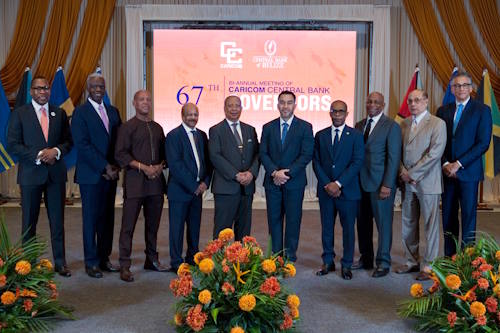
centralbank23112026BELIZE CITY, BELIZE:---  The Central Bank of Belize hosted the 67th Bi-Annual Meeting of the CARICOM Central Bank Governors from
19 to 20 November 2026, at the Fort George Belize, Autograph Collection, in Belize City. Chaired by Governor Kareem Michael, the meeting brought together Governors, Deputy Governors, and senior central bank officials from across the Caribbean to deliberate on regional economic developments and
initiatives aimed at strengthening financial resilience, deepening regional cooperation, and supporting sustainable economic growth.

The meeting was held under the theme, “From Vulnerability to Capacity: Recalibrating Policy and Growth Drivers in Small States amid Global Shifts.” The theme framed the discussions on the inherent vulnerabilities faced by small open economies and the importance of strengthening policies,
institutions, and regional frameworks to enhance resilience, absorb global shocks, and improve conditions for sustainable economic development.
Governors noted that small open economies continue to face challenges arising from global economic uncertainty, climate-related risks, and rapid technological change. Governors also approved measures to strengthen regional data and research capabilities, including a framework to improve the
consistency, comparability, and timeliness of regional statistics.

Governors endorsed the development of a strategic roadmap to accelerate interoperable payments across the region, to be led by the Bank of Jamaica with support from the Eastern Caribbean Central Bank. They reaffirmed payment system modernization as a key pillar of regional financial integration
and economic development.

Governors received a presentation from the Pan-African Payment and Settlement System (PAPSS) on its governance framework, operating model, and payment solutions, which provided useful insights into regional approaches to cross-border payments and settlement in local currencies.
Governors also received a status update on the pilot of the CARICOM Payment and Settlement System (CAPSS) and agreed that potential pilot banks in the participating countries will soon be approached to take part. The meeting also reviewed progress on regional initiatives aimed at strengthening
resilience and cooperation, including the Caribbean Regional Green Taxonomy, macroprudential policy development, and cybersecurity collaboration. The discussions underscored the importance of building technical expertise and institutional capacity across Caribbean central banks.

Governors also received a presentation on the proposed School of Central Banking and Monetary Policy, a joint initiative of the Central Bank of Barbados and the University of the West Indies, Cave Hill Campus. The initiative is intended to strengthen regional central-bank capacity through training
designed around the practical policy, supervisory, technological, and institutional challenges faced by small states in the Caribbean. The 67th Meeting was held alongside the 57th Annual Monetary Studies Conference (AMSC), where Dr. R. Brian Langrin (Bank of Jamaica), Mr. Larry Howai (Central Bank of Trinidad & Tobago), and Dr. The Most Honorable Kevin Greenidge, F.B. (Central Bank of Barbados) participated in the Governors’ panel discussion, moderated by host Governor Kareem Michael (Central Bank of Belize).

At the close of the meeting, Governors reaffirmed their commitment to deepening regional collaboration, strengthening policies, enhancing institutional capacity, and advancing initiatives that promote sustainable growth amid an increasingly uncertain global environment.
The Governors will reconvene in May 2027 for the 68th Bi-Annual Meeting of the CARICOM Central Bank Governors under the chairmanship of Dr. Gobind Ganga, Governor of the Bank of Guyana.


Subcategories

Vinaora Nivo Slider 3.x
Vinaora Nivo Slider 3.xVinaora Nivo Slider 3.x
Vinaora Nivo Slider 3.x