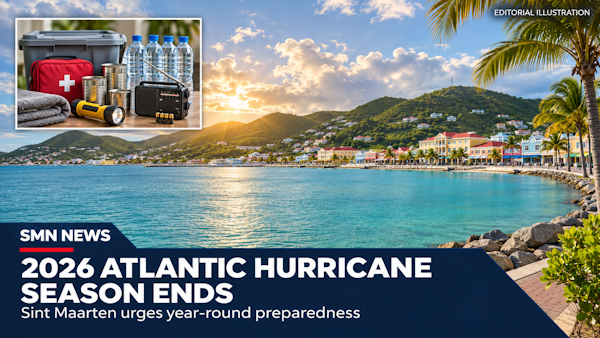
 PHILIPSBURG (DCOMM):--- As the 2026 Atlantic Hurricane Season officially concludes on November 30th, the Office of Disaster Management (ODM) headed by National Disaster Coordinator/Fire Chief Clive Richardson, extends his profound gratitude and relief that Sint Maarten was spared the devastating impact of any major storms or hurricanes.
A total of 10 storms were named, one became a hurricane, and that system became a major hurricane (Category 3+ on the Saffir-Simpson Scale). An average season has 14 named storms, seven hurricanes, and three major hurricanes.
Richardson is reminding the community that disaster preparedness and resilience must remain a year-round priority.
The six-month hurricane season, which began on June 1, featured below-average tropical cyclone activity in the Atlantic Basin, largely influenced by a very strong El Niño weather phenomenon.
El Niño is a naturally occurring climate phenomenon characterized by warmer-than-average sea surface temperatures across the central and eastern equatorial Pacific Ocean.
This event ranks among the strongest on record and played a significant role in shaping tropical cyclone activity across both the Atlantic and Pacific Ocean basins according to meteorologists.
Although the official hurricane season has concluded, tropical weather systems can develop outside the traditional six-month period. Other natural hazards, including heavy rainfall, flooding, earthquakes, tsunamis, and landslides, remain potential threats throughout the year.
Sint Maarten's geographical location makes the country vulnerable to a range of natural hazards. Building national resilience requires sustained preparedness at the household, community, business, and institutional levels.
National Disaster Coordinator Richardson extends his appreciation to the Emergency Support Functions (ESFs) that comprise the country's disaster management organization, emergency services personnel, government departments, critical infrastructure operators, businesses, community organizations, volunteers, and members of the media for their continued contribution to national disaster preparedness and public safety.
Appreciation is also extended to the Meteorological Department of Sint Maarten (MDS), the Office of Disaster Management (ODM), and the Department of Communication (DCOMM) for their respective roles in weather monitoring, disaster preparedness, coordination, and the dissemination of public information.
Richardson also thanks the community for taking personal responsibility, following official weather advisories, and implementing preparedness measures throughout the hurricane season.
Disaster risk reduction is a shared responsibility that requires continued cooperation between government, the private sector, civil society, and every household.
The National Disaster Coordinator encourages the population to remain informed, vigilant, and prepared throughout the year, and to continue monitoring official government information channels and weather advisories issued by the Meteorological Department of Sint Maarten.
The end of the Atlantic hurricane season does not mark the end of disaster preparedness. Preparedness is a continuous process and an essential investment in the safety, security, and resilience of the people of Sint Maarten. Be prepared. Stay informed. Build resilience.