MP presses ministers on stalled revenue laws, food prices, police vacancies, youth prevention, illegal dumping and GEBE
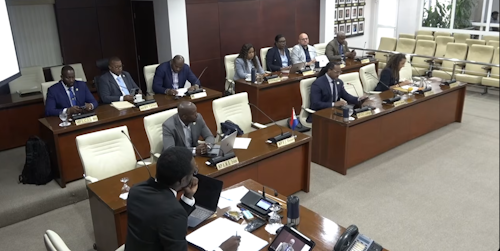 PHILIPSBURG:--- Member of Parliament Sjamira Roseburg has called on the Council of Ministers to establish a shared team of legislative lawyers to clear laws she says are holding up government revenue and practical relief for residents.
Speaking during Parliament’s debate on the draft 2027 budget, Roseburg argued that a balanced budget on paper means little to a household waiting for lower costs, safer streets or support that has yet to materialize. She compared the situation to an employee promised a raise that never reaches the payslip because the letter authorizing it remains unwritten.
Roseburg welcomed the early submission of the budget but questioned whether government has enough legal capacity to carry out its plans. She said Legal Affairs has seven of its 17 positions filled and no department head. She also pointed to Parliament’s previous year, when, according to figures she cited, seven draft laws were submitted, and only one was passed.
Her proposal is for the ministries to agree on a short list of priority laws and engage four to six legislative lawyers for 12 to 18 months to work alongside Legal Affairs. Parliament could then track each law, its stage, the next step and a target date, she said. Roseburg asked whether a standing arrangement for the lawyers could reduce the need for each ministry to begin a separate hiring process or commission further outside consultations.
The possible priorities she named included a visitor levy or tourist tax, gaming legislation, short-term rental rules, revised justice and immigration fees, the price ordinance, motor vehicle inspection fees and legislation to address illegal dumping. She asked Finance whether a January 2027 target for the tourist tax remains realistic and what, if anything, is delaying it.
Fuel relief and the cost of essentials
Roseburg asked the finance minister for the status of a calculation discussed in August to halve the 29-cent-per-liter gasoline excise duty. She wanted to know whether the reduction had been decided. She also asked when a previously announced change would end tax-return filing requirements for pensioners living on AOV.
Returning to a question she raised during the 2026 budget debate, Roseburg urged government to consider tax relief on essentials such as fresh food, cooking gas and hygiene products. If revenue from a visitor tax were used to support such relief, she asked how the government would ensure lower costs actually reached shoppers.
She also pressed TEATT on supermarket oversight. Roseburg asked whether comparisons of prices in the basic goods basket could be published quarterly instead of twice a year, once an online price database is ready, and whether inspections and price warnings could be increased ahead of Carnival and the holidays. She also asked whether inspectors should be empowered to issue administrative fines for breaches of price rules, instead of relying only on reports forwarded for possible prosecution.
Roseburg linked food assistance to local production. She asked how many farmers would participate in the farm-to-supermarket pilot and whether government could buy locally for school meals. She also proposed allowing healthy-food vouchers to be spent with local farmers and fishers.
On government finances, she questioned rising spending and interest costs, investments authorized in earlier years that she said remain unexecuted, and the absence of a cash buffer in the years ahead. She asked whether money could be redirected toward roads, police stations and schools. She also sought an update on a payment arrangement for the government’s debt to SZV, noting the implications she sees for SZV’s payments to Sint Maarten Medical Center.
Vacancies, patrols and youth crime
Roseburg sought a government-wide response to staffing shortages. She asked when a head of Legal Affairs would be appointed, whether funds previously moved to hire temporary legislative lawyers had helped reduce the backlog, and whether critical vacancies could be advertised more widely, including to qualified people in the diaspora. She also questioned staffing at the Fire Department, citing 59 filled positions out of 123.
Turning to Justice, she asked whether the targeted police controls carried out in September would continue in 2027 and what staffing and overtime they would require. She sought details on the planned support of Marines and the militia, cooperation with French-side law enforcement, and the opening date of the proposed public safety center in Cole Bay.
Roseburg cited 189 filled police positions out of 332 and asked how many officers could realistically be recruited and trained if more money were directed to the police force. She also asked whether other personnel could take on duties that do not require trained police officers, freeing officers for patrols.
Her questions extended to camera surveillance, the 2027 Crime Fund policy plan, a proposed HALT program, probation staffing, and the status of revised justice and immigration fees. She asked for details of the Crime Fund projects and whether an agreement with the Sint Maarten Development Fund to manage them had been signed.
Roseburg repeatedly urged ministers to treat youth crime as an issue for Justice, Education and VSA together. Referring to a letter she submitted on September 3, she asked for an update on a proposed pilot involving role models and mentors. She also sought specific plans for after-school activities, evening sports, support for working parents, and a job fair to give people a second chance.
At the Court of Guardianship, she cited 13 filled positions out of 22 and asked what staff and resources were needed to handle cases within legal deadlines. She questioned whether workers had adequate transportation, whether a child abuse and neglect prevention campaign would continue, and whether more foster families would be recruited.
Schools, health and work
For ECYS, Roseburg pressed for a lasting school breakfast program. She said children receiving support through Rotary were reportedly making progress and asked what would happen when existing funding runs out. She proposed sourcing meals from local farmers and asked whether government would consider book lending or uniform support for families struggling with back-to-school costs.
She also asked whether schools teach road safety and proposed a vocational path to prepare students for jobs in the police, customs and prison services, where vacancies persist.
For VSA, Roseburg requested a completion date for the poverty and social minimum study and asked whether it would form the basis of a legal social minimum. She sought timelines for the General Health Insurance and employment benefit laws, asked when a pharmaceutical cost project would result in lower prices for patients, and questioned what Labor Inspection is doing about informal hiring that undercuts workers.
Waste, roads and GEBE
Roseburg asked VROMI for progress on Parliament’s August 27 motion against illegal dumping, including warning signs at dumping sites, a reporting hotline and a promised update to Parliament. She asked whether the waste ordinance would provide for administrative fines and how enforcement would be staffed and funded.
She also requested a district-by-district schedule of roads to be paved in 2027. Roseburg asked whether road funding could cover streetlights and sidewalks near bus stops, schools and poorly lit areas, and sought an update on support for the permits department.
Finally, Roseburg asked whether government had examined the electricity approach discussed by MPs following a visit to Aruba and how it would prevent GEBE’s financial difficulties from being passed on to households. She requested the status of GEBE’s collection and disconnection policy and renewed her call for government to consider an enquête procedure to examine the utility’s long-running problems.
Across the ministries, Roseburg’s central demand was for a timetable that residents and Parliament can follow: which laws and projects government will prioritize, who will complete them, what they will cost, and when people can expect to see a result.