~From Roots to History — Exploring Identity Through National Symbols~
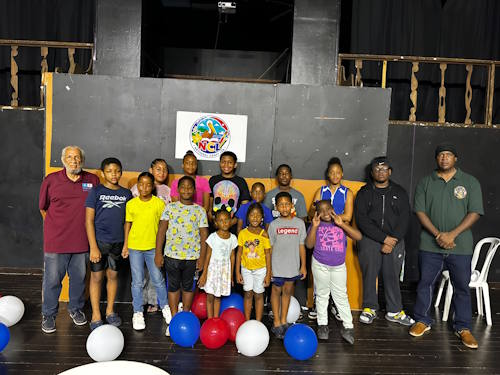 PHILIPSBURG:--- The National Craft Lab: From Roots to History — Exploring Identity Through National Symbols officially kicked off on Saturday, September 12, bringing together 15 young participants between the ages of 5 and 12 for a hands-on journey into St. Maarten’s culture, creativity and craftsmanship. The project will take place at the Philipsburg Cultural Center and run for the next seven weeks.
Made possible through funding from Cultuurfonds Caribisch Gebied, the project introduces young participants to St. Maarten's cultural and national elements while teaching practical creative skills and encouraging a deeper understanding of identity and heritage.
Experienced craftsmen and creative practitioners Lambert Holder and Kenrick La Touche guide the Craft Lab, bringing decades of knowledge in traditional craft, commercial art, costume design, and cultural education into the workshop space.
Holder, a native of Trinidad and Tobago, has a background in technical education, machine shop work, and technical drawing. His creative journey includes work as an art and craft instructor and decades of experience in wood carving, including creating crafted items from driftwood. He has also facilitated workshops throughout the Caribbean and internationally and has continued his creative work in St. Maarten, including involvement with UNESCO-related wire-bending initiatives.
La Touche has been active in the creative arts since 2002 and has produced Carnival and national costumes for St. Kitts, Anguilla, France, Dutch and French St. Maarten, Saba and St. Eustatius & St. Barth's. For the past three and a half years, he has also worked with the UNESCO St. Maarten National Commission on projects in commercial art, formerly known as wire bending.
Their involvement gives young participants an important opportunity to learn directly from practitioners who have spent years developing and preserving hands-on creative traditions.
The first session welcomed 15 students and two youth assistants, who form part of the Craft Lab team. Beyond introducing children to cultural craftsmanship, including youth assistants adds another layer of knowledge transfer, allowing young people to gain practical experience while supporting younger participants throughout the creative process.
During the program, participants will explore five recognizable national and cultural elements — the Brown Pelican, Yellow Sage, Courthouse, Hibiscus and Flamboyant — and translate them into creative works while learning about observation, measurement, shape, symmetry, pattern, construction and presentation.
The initiative aims to strengthen cultural awareness and pride, develop confidence in creative expression and collaboration, and guide each participant toward creating a finished cultural craft piece accompanied by their own story or artist statement.
Over the next seven weeks at the Philipsburg Cultural Center, the National Craft Lab will move from discovery and design into construction, color, texture, craftsmanship, storytelling, and exhibition preparation. The project will conclude with a short public exhibition featuring the students' work, giving them an opportunity to proudly showcase their pieces, share what they have learned, and celebrate their creative journey with the wider community.
With support from Cultuurfonds Caribisch Gebied, the National Craft Lab creates a space where culture is not only discussed but practiced, created, and passed from one generation to another.
“Our hands create, our symbols speak, and our heritage continues.”