PFP MP defends disapproval vote against Patrice Gumbs, explains budget rejection and demands transparency on cannabis commitments
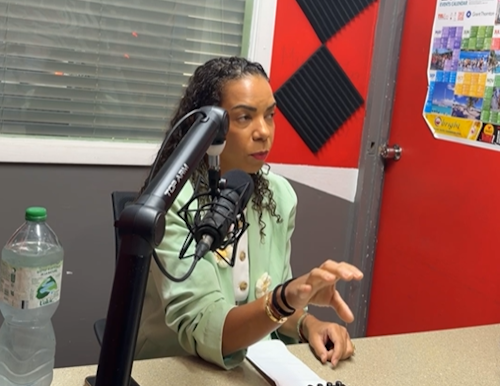 PHILIPSBURG:--- Member of Parliament Ludmila de Weever has delivered a pointed assessment of the government she supports, defending her vote to formally disapprove of VROMI Minister Patrice Gumbs’ performance and warning that improved budget documents do not compensate for ministries failing to account for their outstanding obligations.
Speaking with Lady Grace on The Breakfast Lounge on 102.7 FM, De Weever rejected suggestions that her votes signaled a breakdown in her relationship with the Party for Progress or the coalition. Instead, she described them as the result of concerns she repeatedly raised with ministers, both privately and in Parliament.
Her message was direct: ministers cannot expect continued support without addressing the problems brought to their attention.
“Do you guys drive around?”
De Weever said her support for the motion of disapproval against Gumbs followed repeated complaints about the island's condition and insufficient visible improvement.
She said she forwarded photographs to both the VROMI and TEATT ministers showing conditions in Philipsburg, Pointe Blanche, and even alongside the government administration building.
“Do you guys drive around? Do you guys see what it’s like?” she asked.
According to De Weever, there were no complaints made without suggestions for addressing them.
“I’m not just complaining to you, but I’m also giving you solutions on what to do. But why am I not seeing the change? Why am I not seeing a little bit of improvement?”
She cited concerns involving street cleaning, garbage collection and operations at the dump, arguing that residents were entitled to see results.
De Weever said she informed Gumbs before the vote that she would support the motion of disapproval. She also discussed her position with fellow PFP MP Raeyhon Peterson.
For her, voting against the motion would have undermined the concerns she had already raised.
“If I don’t vote for this motion, then everything that I’ve been communicating with the minister means that everything is peachy keen.”
She distinguished that decision from her earlier refusal to support a motion of no confidence against Gumbs. At that earlier stage, she said, she believed the minister should first receive a warning and an opportunity to improve.
Asked whether the latest vote constituted a final warning, she declined to describe it that way but called it a significant signal that improvement was necessary.
Budget improvements were not enough
De Weever also explained why she voted against the 2026 budget despite recognizing substantial improvements in its presentation and financial disclosures.
She credited the Minister of Finance with considerable work to clean up the document, but said her central concern remained whether individual ministries could provide a reliable account of what they owed.
“If you can’t provide for me a list of outstandings, then how am I supposed to trust that your forward-looking plans for this country are responsible, and you have control of it?”
“The budget being cleaned up is one thing. The ministers getting a handle of everything they have to pay is the most important thing.”
She called for better coordination between ministries and their financial controllers, a centralized record of commitments, and a proper inventory of government-owned and rented properties.
De Weever supported the Finance Minister’s stated “no purchase order, no pay” approach, arguing that traceable documentation must support public expenditure.
Handshake arrangements, she said, could not substitute for recorded agreements between government and contractors, suppliers or other service providers.
Despite rejecting the budget, she said continued improvements could put her in a position to support the 2027 budget.
Cannabis questions are about the deal
De Weever also pushed back against characterizations of her cannabis questions as opposition to legalization itself.
“This is not an anti-legalization conversation,” she said.
Her concern, she explained, was what the government may already have committed the country to, what financial consequences could follow, and whether the proposed arrangement would benefit Sint Maarten.
De Weever alleged that the company involved in researching and helping develop the cannabis framework had been promised ten years of exclusivity. She questioned the implications of allowing a prospective commercial beneficiary to help develop the framework under which it would operate.
She also challenged whether the ministers involved had the legal authority to make the commitments she described.
Those assertions remain De Weever’s account and interpretation. The interview material did not include the underlying agreement, and the transcript alone could not establish its terms or legal effect.
De Weever said her requests for documentation initially met with confidentiality objections, before the TEATT Minister offered a closed-door meeting shortly before the vote on her motion.
She maintained that Parliament needed to examine the agreement and understand both the country’s exposure and its expected financial return.
Party loyalty does not end scrutiny
De Weer insisted that she had communicated her positions in advance and that they should not be mistaken for a personal campaign against colleagues.
She said she had allowed ministers time to work, observed their performance and raised concerns behind closed doors before speaking more forcefully in public.
“What I have been observing is not all peaches and cream. It’s not all good.”
She also challenged the notion that silence should be interpreted as approval.
“Quiet sometimes is acceptance.”
For De Weever, the responsibility of a coalition parliamentarian includes telling ministers when their performance falls short—even when those ministers belong to her own party.
“What I say on the radio, what I say on the floor of Parliament, I’ve said it to the ministers beforehand and my colleague MPs beforehand,” she said. “So, I have nothing to hide.”