~Government cites targeted assistance while MPs demand wider relief and question delays in tourism-tax reforms.~
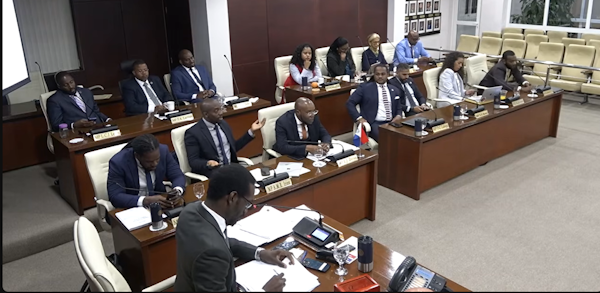 PHILIPSBURG:--- The 2026 budget debate ended with the government defending targeted support for vulnerable households while MPs continued demanding broader relief from electricity bills and the rising cost of living.
Both positions need to be reported accurately: government identified an existing utility-assistance pilot, but that program is not an across-the-board reduction in GEBE bills.
Prime Minister Dr. Luc Mercelina told Parliament that vulnerable households could receive up to Cg. 250 monthly toward electricity and water bills under a program implemented by VSA in cooperation with GEBE.
He said the pilot runs through November 2026 and would be evaluated afterward.
For qualifying households, that assistance is a concrete measure. For residents seeking a general reduction in energy costs, the wider dispute remained unresolved during the debate.
Ottley demands relief; government cites limited financial room
MP Omar Ottley made household relief central to his opposition to the budget.
“I cannot support this budget if there is no relief for the people,” he said before the final vote.
MP Egbert Doran also challenged the absence of a clear approach to electricity and fuel-cost relief. MP Francisco Lacroes, who supported the budget, described families having to choose between rent, utilities, school expenses, transportation and food.
Mercelina acknowledged the demand for more direct assistance but said relief must be affordable, sustainable and consistent with the country’s financial stability.
His argument was that government must protect vulnerable households while also addressing the structural factors driving costs.
The disagreement was therefore not simply about whether residents were struggling. It was about the scale, timing and financing of government’s response.
A fuel-price cap meets resistance
TEATT Minister Grisha Heyliger-Marten rejected the suggestion that capping heavy fuel oil prices below international market prices would provide a straightforward solution.
She warned that such an approach could threaten fuel supply or GEBE’s financial position.
“We cannot control the global oil prices, but here is what we can control and what we are doing right now through BTP,” she said.
“We are auditing GEBE to hold them accountable for its concessions so that our residents finally get the transparency for fair billing we deserve.”
That was government’s stated regulatory response, not a confirmed announcement of a particular reduction in customers’ bills.
Reviewing costs and billing methodology can support future decisions. It is not the same as specifying how much a household will save or when.
Tourism-tax proposals remain unfinished
The pressure for relief also sharpened questions about the government’s efforts to broaden revenue collection.
Heyliger-Marten supplied a chronology for the proposed modernization of lodging taxation: drafting was assigned in March 2025, a draft was completed and submitted to Legal Affairs in October, and it went to other departments for review in November.
By the August 26 debate, she said, it remained under government review.
The proposal would create a mechanism for platforms such as Airbnb and Booking.com to collect lodging guest tax and remit it directly to the government. It also addresses points-based timeshare stays.
The minister discussed substantial potential revenue, but explicitly characterized the amounts as projections.
Those estimates cannot responsibly be described as money already collected, guaranteed revenue or a sum immediately available to finance relief.
Finance Minister Marinka Gumbs separately emphasized that short-term rentals already carry existing tax obligations. The issue was not that the entire sector was legally tax-free, but that identification, compliance and collection needed improvement.
Visitor’s tax still targets January 2027
Gumbs identified the visitor’s tax as an immediate legislative priority, with implementation targeted for January 2027, subject to completion of legislative and operational requirements.
She could not confirm a precise submission date to Parliament.
The minister said the inherited draft required substantial revision following advice and internal legal review.
Ottley challenged her description of the Social Economic Council’s advice, saying he did not see the criticism of legislative quality she had described.
Gumbs clarified that the concerns about quality and insufficient consultation came from Legal Affairs.
“But I do agree that it is time that we move along with the tourist levy,” she said.
That clarification matters: the council’s recommendations and Legal Affairs’ assessment should not be merged into one finding.
Votes do not automatically lower prices
Parliament adopted motions seeking stronger price monitoring and a revised basket of controlled goods. It also approved Cg. 750,000 in additional financial-assistance funding through a reallocation within VSA.
These decisions create obligations and resources for action. They do not automatically prove that prices have fallen or that every recipient will receive a larger benefit.
The financial-assistance amendment was explained as addressing an anticipated shortfall, not establishing a universal increase in individual payments.
The questions left after the budget vote are practical: Who qualifies for assistance? What happens after the utility pilot ends? When will regulatory work produce a billing decision? And when will proposed tax-collection measures move from review to implementation?
For households balancing rent, groceries, and electricity, those answers matter more than the number of motions adopted.