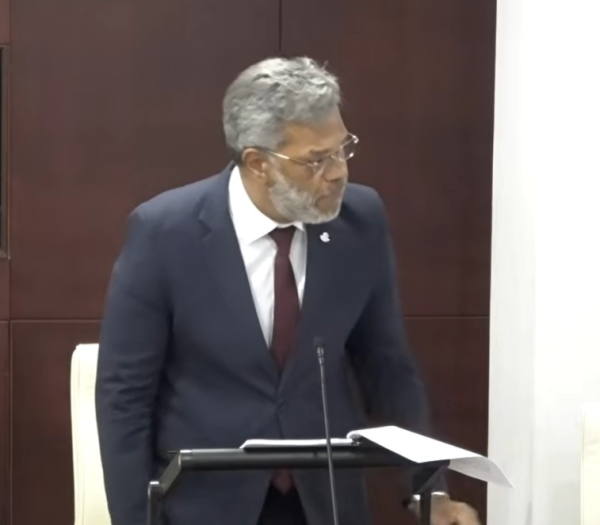
 PHILIPSBURG:--- Prime Minister Dr. Luc Mercelina spent hours in Parliament responding to questions from Members of Parliament regarding allegations surrounding healthcare exemptions, the Healthcare Professional Registry (BIG/HCPR) project, government hiring practices, and his interactions with the Ministry of Public Health, Social Development and Labor (VSA).
The session was marked by frequent interruptions from MPs seeking clarification on the Prime Minister’s decisions, particularly concerning the extension of an exemption for a medical professional and his involvement in matters under the former Minister of VSA.
Mercelina maintained that his actions were lawful and within his authority as Acting Minister of VSA at the time. He stressed that the matter under discussion involved the extension of an existing exemption rather than the approval of a completely new medical practitioner.
According to the Prime Minister, the doctor in question had already been granted an exemption in 2022 and had accumulated years of experience within the Sint Maarten healthcare system. He argued that the country’s shortage of medical professionals and the need to maintain continuity of healthcare services justified his decision to disagree with advice recommending denial of the exemption’s extension.
Several MPs challenged that explanation, arguing that distinctions existed between a medical doctor and a general practitioner and questioning whether the professional met all legal requirements to practice in the role granted. Mercelina countered that healthcare systems differ internationally and that exemptions are specifically provided for under existing legislation to address exceptional circumstances.
The Prime Minister also defended his role in discussions surrounding the Healthcare Professional Registry legislation. He stated that a legislative lawyer who worked on the draft law was hired through a vacancy process within Legal Affairs and was later assigned to assist with legislative projects, including healthcare reform, ministerial screening legislation, electoral reform, and rules governing political appointments.
Mercelina denied allegations that he sought to bypass procurement procedures or improperly influence a tender process related to the healthcare registry project. He said discussions with the Temporary Work Organization (TWO) were intended to encourage consideration of a professional already familiar with the legislation rather than to circumvent established procedures.
Throughout the meeting, the Prime Minister repeatedly emphasized his authority as Chair of the Council of Ministers. He maintained that the Rules of Order grant him responsibility for managing the Council’s agenda and discussing agenda items with ministers before matters are formally placed before the Council for decision.
He also rejected claims that he pressured civil servants or interfered in the affairs of other ministries. According to Mercelina, no directives were issued to civil servants to bypass ministers, department heads, or secretaries-general.
The session featured several exchanges between MPs and the Prime Minister, with opposition members questioning his explanations and challenging aspects of his interpretation of healthcare regulations and governance procedures. Despite the criticism, Mercelina consistently defended his decisions as being motivated by governance responsibilities and the public interest.
The Prime Minister concluded many of his responses by reiterating that integrity standards should apply equally to all public officials and that allegations should ultimately be assessed on facts, evidence, and due process.