~Finance Minister Says Licensing Framework Could Finally Attract International Financial Apps~
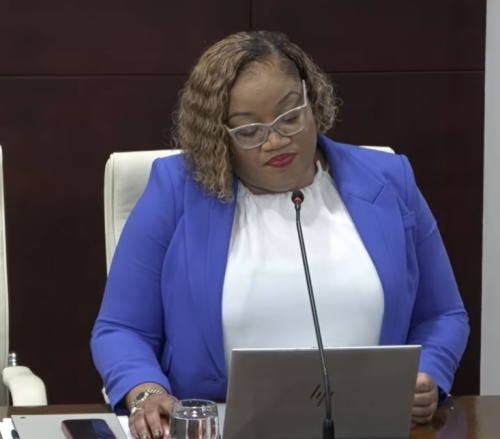 PHILIPSBURG:--- St. Maarten could soon position itself to attract global digital payment platforms such as Revolut and PayPal if Parliament approves a new package of financial legislation currently under debate.
Minister of Finance Marinka Gumbs told Parliament that the absence of a proper licensing and supervisory framework has been one of the biggest barriers preventing major international payment providers from operating in St. Maarten.
“The National Ordinance creates market access for payment service providers,” Gumbs explained during the Central Committee meeting. “Without a license and supervision from the Central Bank, international payment service providers headquartered abroad, such as PayPal and Revolut, would not be willing to offer their services in St. Maarten.”
LEGAL FRAMEWORK SEEN AS FIRST STEP
According to the Minister, the proposed legislation would establish the legal credibility and regulatory certainty international fintech firms require before seriously considering entry into the local market.
Gumbs acknowledged public frustration that residents still face limited access to many international financial apps and digital payment services widely available elsewhere. She argued that passing the legislation is the necessary first step toward changing that reality.
WHY ST. MAARTEN COULD ATTRACT FINTECH
The Minister outlined several advantages she believes could make St. Maarten attractive to companies like Revolut and PayPal:
U.S. Dollar Economy
Although the Caribbean guilder is the official currency, much of St. Maarten’s economy already functions heavily in U.S. dollars due to tourism and international commerce.
Unique Euro–Dollar Position
St. Maarten’s open border with French Saint-Martin creates a rare environment where euro and U.S. dollar transactions coexist daily, offering opportunities for cross-border digital payment services.
Massive Transaction Volume
Gumbs argued that St. Martin should not be judged solely by population size, but by the sheer number of daily transactions generated through tourism, restaurants, villas, car rentals, excursions, and cruise activity.
“The question becomes not simply how many people live here, but rather how many transactions flow through this economy every single day,” the Minister stated.
WHAT HAPPENED TO REVOLUT?
Members of Parliament also questioned why Revolut cards previously appeared to work in St. Maarten before the service later became unavailable.
Gumbs explained that Revolut had initially allowed limited international access through its broader platform but had likely reconsidered its long-term operations because of the absence of a clear local regulatory framework.
“There is no indication that their services were revoked due to one single incident,” she said, adding that companies continuously reassess jurisdictions based on compliance requirements, market viability, and regulatory certainty.
DIGITAL FUTURE
The finance minister stressed that the legislation alone will not automatically bring fintech companies to St. Maarten overnight, but said it establishes the foundation for serious negotiations with global providers.
The government believes the laws could modernize the island’s financial sector, improve competition, reduce barriers to digital payments, and ultimately give residents and businesses greater access to modern banking technology.
As Parliament continues deliberations, the debate over fintech licensing and financial modernization is rapidly becoming one of the most closely watched economic discussions in St. Maarten.