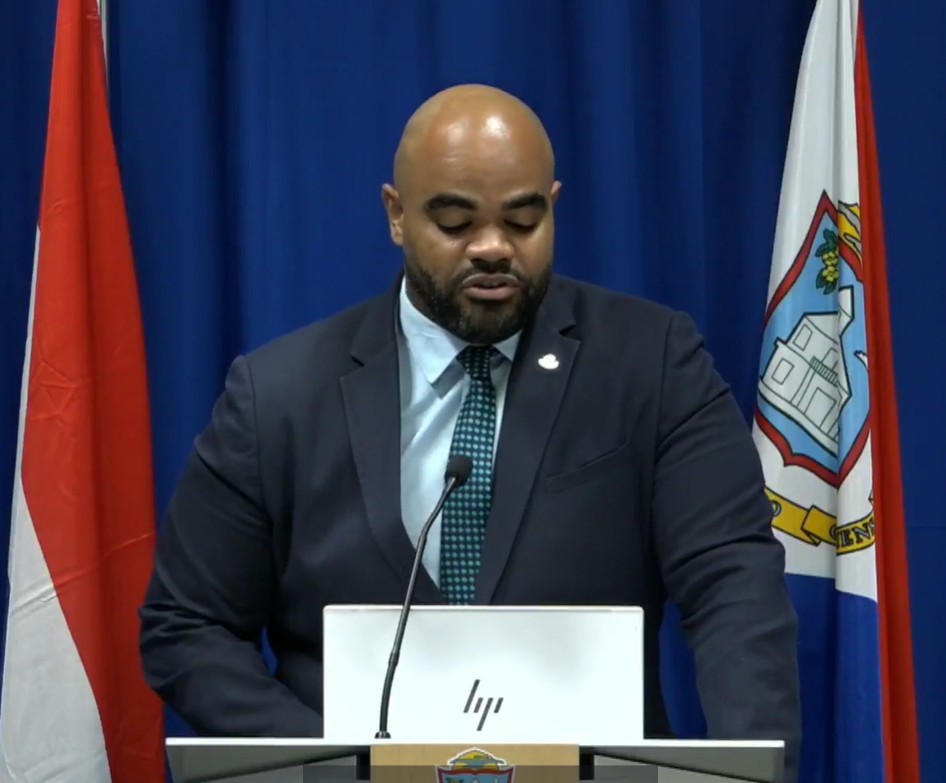
 PHILIPSBURG:--- Minister of Public Housing, Spatial Planning, Environment, and Infrastructure (VROMI), Patrice Gumbs Jr., announced the retendering of solid waste contracts after all bids submitted in the initial process were disqualified for procedural discrepancies. However, this decision has drawn sharp criticism as the island grapples with a growing waste management crisis and broader governance challenges.
A Procedural Breakdown
During a press briefing, Minister Gumbs explained that the evaluation phase revealed inconsistencies between the bids and the tender requirements. Of the 17 bids received, 11 were excluded early for failing to follow proper procedures, while the remaining six were disqualified for not adhering to the terms of reference. This has left the government with no choice but to restart the process.
“This has nothing to do with the government side,” Minister Gumbs emphasized, attributing the failure entirely to the bidders. However, critics argue that the Ministry of VROMI’s lack of oversight and communication has exacerbated the situation. According to reports, contractors have been left in limbo, with some filing complaints with the Ombudsman over the flawed process.
Philipsburg’s Filth: A National Embarrassment
The delay in awarding new contracts has had visible consequences. Philipsburg, the heart of St. Maarten and a tourism hub, has become a glaring symbol of neglect. The Boardwalk and Great Bay Beach, once vibrant attractions, are now littered with trash and broken glass, posing safety hazards to residents and visitors alike.
Despite reports that new garbage bins have already arrived on the island, they remain in storage, accruing unnecessary fees. This inaction has left the streets and beaches in disrepair, further tarnishing the island’s reputation as a tourist destination.
Budgetary Paralysis Compounds the Crisis
Adding to the challenges is the government’s inability to finalize the 2026 budget. Without an approved budget, the government is legally restricted from awarding multi-annual contracts, including those for waste management. This financial paralysis has left the administration reliant on outdated 2024 budget parameters, delaying critical infrastructure projects and public services.
The delay has also raised questions about the legality of certain expenditures, such as Carnival subsidies, which were reportedly paid without budgetary approval. This has led to concerns about potential constitutional violations and the personal liability of ministers who authorized these payments.
Interim Measures and Long-Term Plans
In the absence of finalized contracts, the government has implemented a three-month interim plan to manage waste collection. During this period, the contracting team will oversee operations using government rates and verified contractors. Minister Gumbs also highlighted ongoing efforts to restructure the waste sector, including the establishment of a waste authority and a new payment framework.
However, critics argue that these measures are insufficient to address the immediate crisis. The lack of communication and transparency from the Ministry of VROMI has eroded public trust, prompting many to call for greater accountability and decisive action.
A Call for Leadership
The retendering of solid waste contracts is a critical step in addressing St. Maarten’s waste management challenges. However, the broader issues of governance, financial mismanagement, and operational inefficiencies must also be addressed to restore public confidence and ensure the island’s long-term sustainability.
As April 1 approaches, the people of St. Maarten are left wondering whether the government can rise to the occasion or if the island will continue to be buried in trash and broken promises.