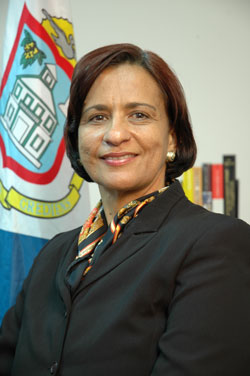
 PHILIPSBURG:--- The Chairlady of Parliament of St. Maarten, Sarah A. Wescot-Williams, has called for renewed commitment, accountability, and structural strengthening of the Inter-Parliamentary Kingdom Consultation (IPKO) following the conclusion of the recent gathering hosted in Aruba.
Speaking at the closing press briefing, the Chairlady expressed sincere gratitude to the host country, the organizers, and parliamentary colleagues from Curaçao, Aruba, and the Netherlands for the constructive dialogue held both formally and informally during the consultation.
She underscored IPKO’s unique and critical role within the Kingdom of the Netherlands, particularly given the absence of a formal Kingdom Parliament. According to the Chairlady, IPKO remains the only structured forum in which parliamentarians of the four countries can deliberate collectively on Kingdom-wide matters.
While acknowledging the quality of discussions, Wescot-Williams emphasized the recurring challenge of important issues being raised repeatedly without sustained follow-through.
She noted that IPKO has, in the past, demonstrated its capacity to take collective decisions, most notably regarding the long-discussed Dispute Regulation. However, that process ultimately stalled.
Wescot-Williams highlighted that differing legal interpretations and political perspectives among the countries make a functioning dispute regulation indispensable. She confirmed that a draft prepared by the Caribbean countries has been submitted and is currently under review via the channels for a Kingdom law.
She urged all governments involved to ensure that this matter is brought back on track and finalized, emphasizing that a credible Kingdom structure requires a reliable and fair mechanism to resolve disagreements.
“There must be a deliberate effort to avoid ‘tiptoeing around’ difficult topics,” she stated, stressing that controversial or complex matters cannot continue to be deferred once they become politically sensitive or divisive.
The Chairlady accepted a mandate to bring forward proposals aimed at improving the functioning and effectiveness of IPKO. She stressed that consultations must produce measurable outcomes and that mechanisms for continuity and accountability are essential.
Responding to a question from the media, the Chairlady also raised the broader issue of the Kingdom’s institutional framework. While not formally advocating for the immediate establishment of a Kingdom Parliament, she noted that global developments and geopolitical shifts necessitate reflection on how the rights and interests of all people within the Kingdom are safeguarded.
She opined that the structure of the Kingdom, including the potential need for a more formal parliamentary arrangement should be revisited in future IPKO consultations.
In addition to institutional matters, IPKO participants engaged in discussions on:
• Security and cybersecurity
• Climate adaptation and environmental resilience.
• Aging populations.
• The legacy of the slavery past.
• The geopolitical impact of rapidly changing global dynamics.
The Chairlady stressed that these are not abstract discussions but pressing matters that require coordinated Kingdom-level responses.
Wescot-Williams reaffirmed that IPKO remains a vital platform for parliamentary unity within the Kingdom. In the absence of a formal Kingdom Parliament, it serves as the principal venue where representatives deliberate as one body on shared responsibilities and challenges.
She concluded by expressing hope that the outcomes of this consultation would not remain confined to reports and statements, but would translate into tangible progress by the next IPKO meeting.
“Consultation must lead to consolidation, and consolidation must lead to results,” she affirmed.