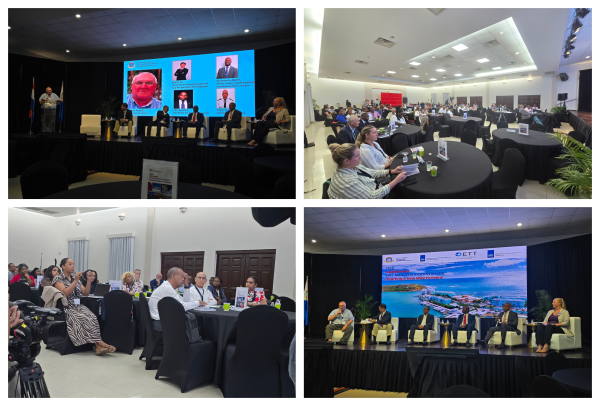
 PHILIPSBURG:--- The second day of the Strategic Economic Stakeholders Consultation focused on the evolving future of tourism, yachting, safety, sustainability, and economic resilience for Sint Maarten. During the morning panel discussion, regional and local experts shared frank perspectives on the opportunities ahead, while emphasizing the need for coordinated action, data-driven decision-making, and a stronger national vision.
Moderator James Hepple opened the session by underscoring the importance of real-time data and measurable indicators to identify genuine opportunities within the tourism sector. Panelists stressed that while metrics such as visitor arrivals, revenues, and average daily rates remain important, they must be balanced with broader considerations such as quality of life, community wellbeing, and the authentic experience that defines Sint Maarten.
Hotelier Emil Lee highlighted that building a destination people want to visit begins with creating a place where residents themselves can thrive.
Echoing this sentiment, Anastacio Baker noted that repeat visitors remain one of Sint Maarten’s strongest success indicators, driven largely by the warmth and character of its people. The discussion reinforced that the island’s identity is shaped less by labels and more by a shared cultural experience that blends its diversity into a uniquely Sint Maarten story.
Alex Gumbs, CEO of Port St. Maarten Group, emphasized the importance of optimizing visitor movement throughout the destination, particularly in addressing traffic congestion and enhancing transportation alternatives. He noted that improving mobility could unlock greater economic value by allowing visitors to participate in more activities across the island. Gumbs also outlined sustainability initiatives within the cruise sector, including long-term environmental targets and strategic considerations such as homeporting and future energy demands.
From a safety and governance perspective, Chief of Police Carl John stressed that defining challenges clearly is critical to identifying effective solutions. He pointed to the need for stronger compliance enforcement, improved communication between agencies, and ensuring that the experiences marketed to visitors align with the realities delivered on the ground.
Environmental sustainability and climate resilience emerged as key themes throughout the discussion. Leslie Dickerson of the Nature Foundation highlighted the potential for eco-tourism and low-impact experiences, emphasizing that future development must protect infrastructure, natural resources, and the wellbeing of residents.
Panelists also referenced the importance of climate-adaptive planning, including resilient zoning practices, nature-based flood solutions, and coral restoration efforts to safeguard coastal areas.
When asked to define success for Sint Maarten, panelists agreed that traditional economic indicators alone are insufficient. Success was described as a tourism economy that benefits all residents, supports long-term resilience, and strengthens community pride. Discussions also touched on practical improvements such as urban aesthetics, billboard regulation, training within the hospitality sector, and aligning infrastructure development with the pace of tourism growth.
The panel concluded with a call for holistic collaboration across government, industry, and civil society. Participants emphasized that while many of the solutions discussed have been identified in past plans, the focus moving forward must be on implementation, accountability, and measurable progress toward a more sustainable and inclusive tourism economy.