~“Trust, Transparency and Technology: Regulating the Next Wave of Fintech”~
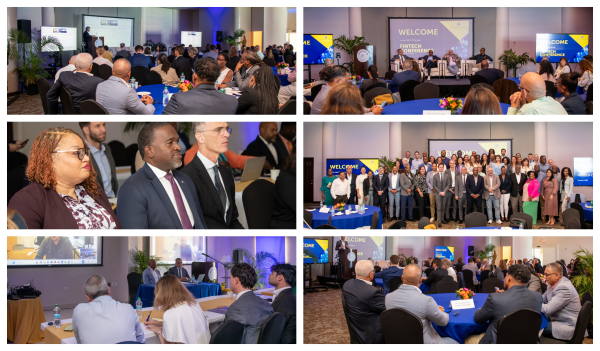 PHILIPSBURG:--- On December 4 and 5, 2025, the Centrale Bank van Curaçao en Sint Maarten (CBCS) hosted its 3rd Annual Fintech Conference at Simpson Bay Resort in Philipsburg, Sint Maarten. The two-day conference featured a closed roundtable session for regulators on Thursday, followed by a public conference on Friday, bringing together central bankers, innovators, and fintech experts from across the Caribbean and LatAm region, Europe, the Middle East, and Asia. The conference highlighted the Central Bank's vital role in shaping the future of finance.
This year’s key themes were centered around Payments Innovation & Digital Assets Regulation, Fintech as driver of financial inclusion in LatAm & the Caribbean, Stablecoins & Digital Finance, and The Future of Banking, including developments in the Neobanks space.
The conference’s central theme - Trust, transparency and technology: regulating the next wave of fintech - emphasized the important role central banks play in future-proofing financial regulation that supports innovation. While regulation is essential in protecting consumers, fostering an environment that encourages innovation is equally important.
In his keynote speech, Richard Doornbosch, president of the CBCS, stressed the great promise fintech holds to bring financial services to underserved and unbanked populations. The regulatory framework must evolve in a way that creates space while safeguarding stability and integrity.
Various fireside chat sessions and panel discussions demonstrated the need for tailored solutions to local and - where possible - regional challenges. Differences in the payment landscapes in LatAm and the Caribbean were discussed with highlighted examples and shared regional success stories of Sint Maarten, Curaçao, Aruba, and the Bahamas. In addition, conversations centered on digital payment frictions in the still highly cash-based, tourism-dependent economies of Sint Maarten & Curaçao. Moreover, the pros and cons of Central Bank Digital Currencies (CBDC) were briefly touched upon, as well as developments pertaining to the promises of tokenization and respective underlying (fractional) ownership implications. Furthermore, the role of data centers as enablers of financial inclusion was briefly discussed, through which
sovereign control over data was emphasized. Discussions were further focused on the future of banking, whereby panelists emphasized the power of co-existence and co-creation. These conversations highlighted the important role of both traditional banks and neobanks. As enablers of access to financial services for both existing and underserved communities, they can support tailor-made financial innovations.
The conference concluded with representatives from the Global Blockchain Business Council (GBBC) & The Luxembourg House of Financial Technology (LHoFT) committing to helping advance the region in accelerating its fintech and payments ecosystem. As a first step, the gaps in the existing payments infrastructure should be identified and mapped based on the outcomes of the conference. The CBCS applauds this initiative and welcomes collaboration aimed at enhancing the financial resilience of the monetary union.
With its annual Fintech Conference, the CBCS aims to engage stakeholders, including innovators, policymakers, regulators, and the (wider) public, in critical and actual conversations centered around financial innovation development in relation to digital finance regulation within the monetary union.
Willemstad, December 11, 2025
CENTRALE BANK VAN CURAÇAO EN SINT MAARTEN