 Dear Editor,
Two stories circulating recently in the local media deserve to be read together. The first: Sunresorts Ltd. N.V. is asking the Court of First Instance to declare its ownership in Mullet Bay as extending all the way to the coastline. The second: the Nature Foundation St. Maarten has again sounded the alarm over accelerating development activity around Mullet Bay, Beacon Hill, and Little Bay. Side by side, they raise a question that goes well beyond any single court case — who does this island actually belong to?
The Nature Foundation has been raising these concerns consistently and with evidence for years. When they speak, the right response is to listen seriously, not manage the optics. St. Maarten has finite land, finite coastline, and finite ecological resilience. The pressures accumulate quietly until what you assumed was still there is already gone.
Those pressures extend well beyond the environmental. Our roads are overwhelmed, our utilities remain fragile, and the quality of daily life for residents is being steadily worn down by growth that has routinely outpaced any serious capacity to manage it. Any honest conversation about development has to reckon with all of that, not just with what can be built.
But the question of beach access is the one I feel most urgently. Our beaches are among our most fundamental natural, social, and cultural assets — Mullet Bay especially. Families gather there. Children learn to swim there. People from every background share the same stretch of sand. Once that is gone, no settlement or marketing campaign brings it back.
I do much of my professional work in Jamaica, and one of the most painful things I encounter there is what has happened to the coastline. Less than one percent of Jamaica’s shoreline remains genuinely accessible to the public. It happened incrementally — a resort here, a concession there — each decision defensible in isolation, until the coast that belonged to Jamaicans in every real sense was no longer theirs to reach. I see the consequences every time I am there.
But I also want to be clear about what genuine public access must mean. A beach that is legally open yet practically hostile to residents has not been protected. The jet ski concessions that make the water aggressive and dangerous — and we were recently reminded how deadly that can be, following the fatal accident in Tobago — do not serve the public. The beach bar positioning itself as a faux St. Tropez, oriented entirely toward tourists, does not serve the public. The chair rental operators who hassle residents for simply sitting on their own beach certainly do not serve the public. Legal access that hands the space to a different set of commercial interests is no victory.
Beaches should be held for their natural, social, and cultural value, and that must shape what the government actually defends in court and how it manages the shoreline afterwards. St. Maarten still has a choice here. Mullet Bay is still there. I hope those in positions of responsibility treat it accordingly.
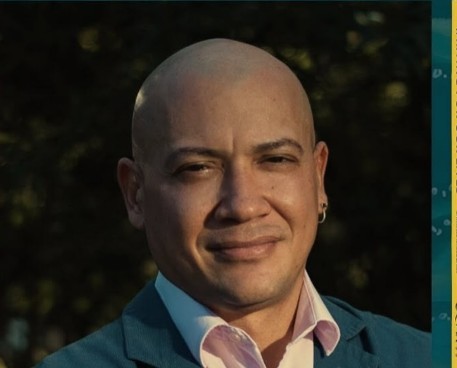
Tadzio Bervoets
Belair
St. Maarten